Hair loss
Dutasteride vs Finasteride: Which Is Better for Hair Loss?
Dutasteride and finasteride are both effective DHT blockers for hereditary hair loss, but they work in different ways. Finasteride primarily blocks type II 5-alpha-reductase and is officially approved for hair loss¹. Dutasteride blocks both type I and type II enzymes and may be slightly more effective in some cases, but it is not approved for hair loss in the Netherlands². Studies show that dutasteride is in some cases more effective than finasteride, with effectiveness between 80-92% depending on the hair loss pattern⁷. Finasteride remains the first-line choice due to its proven safety profile and regulatory approval. Dutasteride may be considered when finasteride is insufficient, always under medical supervision.
LAST UPDATE
MEDICALLY REVIEWED BY
Romke Brada, general practitioner
TIME
7 min
read
KEY WORDS
• Dutasteride vs finasteride • Dutasteride hair loss • Finasteride alternative • Blocking DHT • Dutasteride effectiveness
How do dutasteride and finasteride work?
To answer the question of finasteride versus dutasteride, we first need to understand how these medications work. Both are 5-alpha-reductase inhibitors - medications that block DHT, the hormone responsible for hair loss.
The mechanism of action
Your body produces testosterone. An enzyme called 5-alpha-reductase converts testosterone into DHT (dihydrotestosterone). DHT can bind to hair follicles and cause them to shrink, leading to thinning hair and eventually baldness.
The key difference lies in the fact that 5-alpha-reductase exists in two forms: type I and type II.
Finasteride: selective inhibition
Finasteride primarily blocks the type II enzyme, which is most active in the scalp and hair follicles. By inhibiting type II, finasteride reduces DHT levels by approximately 70%⁴, which is sufficient to stop hair loss in the majority of men³.
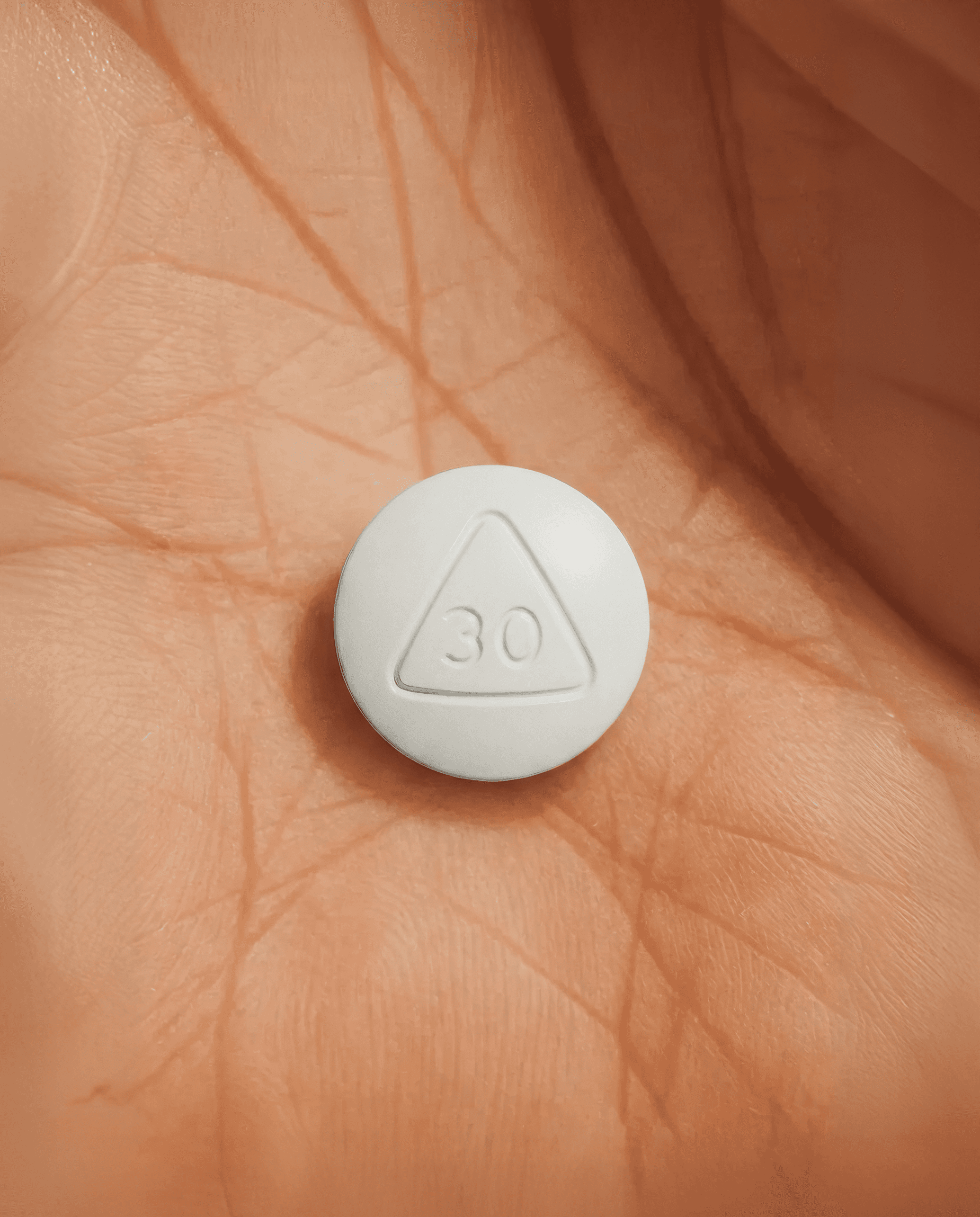
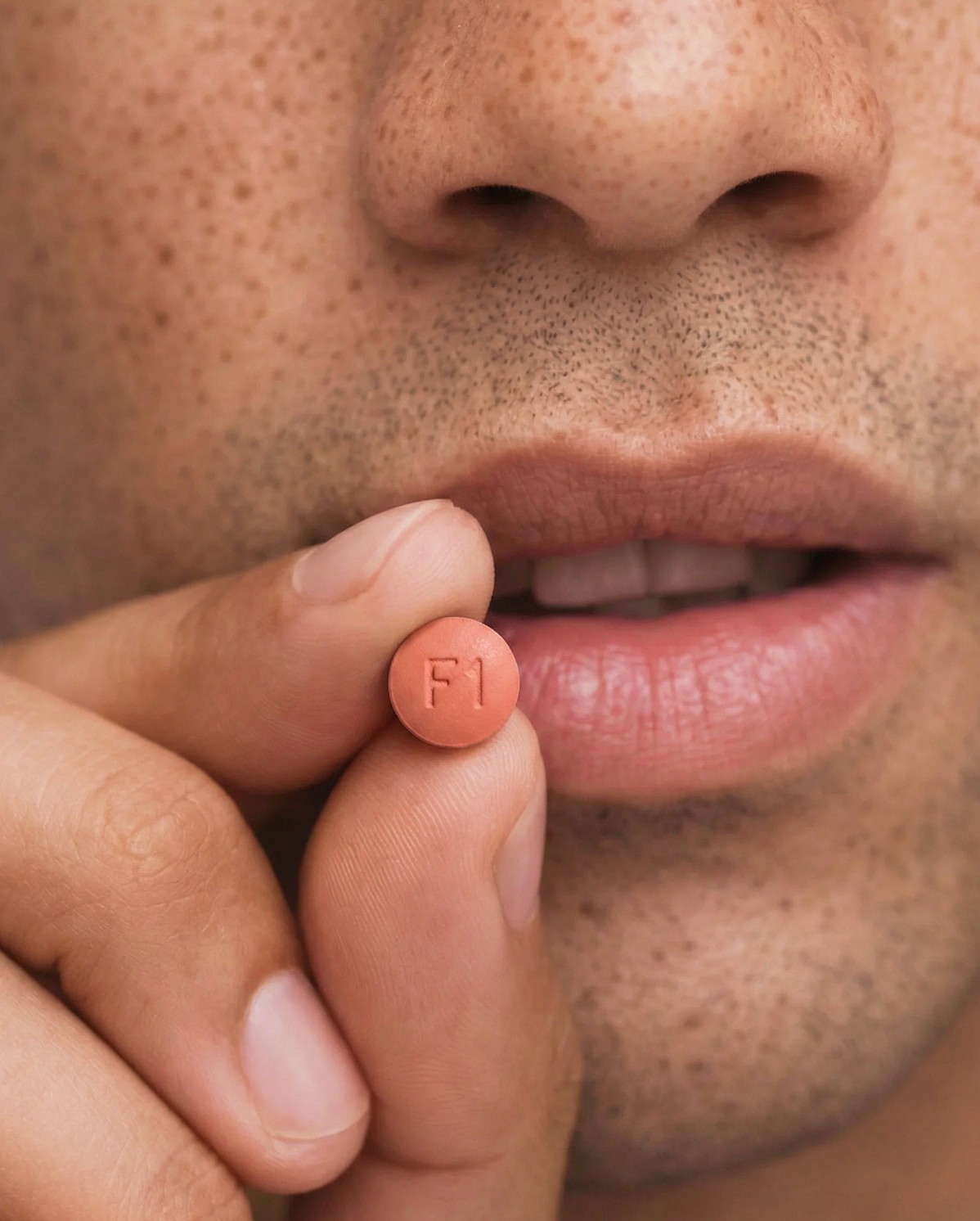
Finasteride is taken as a daily 1 mg tablet. It works systemically - traveling through the bloodstream to protect hair follicles from DHT.
Dutasteride: dual inhibitor
Dutasteride goes a step further. It blocks both type I and type II 5-alpha-reductase¹. This leads to a significantly stronger DHT reduction than finasteride - studies show that dutasteride lowers DHT more effectively by blocking both enzymes¹. Because both enzymes are inhibited, DHT levels decrease not only in the scalp but throughout the body.
The standard dose of dutasteride for hair loss is 0.5 mg per day. Like finasteride, it is taken orally as a tablet.
The practical difference
Both medications aim to protect hair follicles by lowering DHT. The difference lies in potency: finasteride is more selective and targeted, while dutasteride is broader and more powerful¹˒².
Which is better depends on the individual. For most men, finasteride is sufficiently effective. Dutasteride is better viewed as an alternative for specific cases where additional potency is needed.
Effectiveness: what does the science say?
The effectiveness of dutasteride is an important topic, especially for men who are considering switching from finasteride. What do the studies show?
Finasteride: a proven track record
The effectiveness of finasteride is well established. Clinical studies show that up to 83% of men experience halted hair loss or no further progression after two years of use³. This result has been consistently confirmed in multiple large-scale studies.
Finasteride works best at the crown and vertex (top of the scalp). Results at the hairline are generally more modest but often still significant.
Dutasteride: potentially slightly more effective
Studies on dutasteride for hair loss show that the medication is effective. Depending on the hair loss pattern, dutasteride appears to be effective for 80-92% of users⁷.
A key study from 2006 directly compared dutasteride with finasteride and found slightly better hair coverage with dutasteride¹. A more recent meta-analysis from 2019, pooling data from multiple studies, confirmed that dutasteride appears marginally more effective².
Important nuance: the difference is limited
Here's the important caveat: although dutasteride shows slightly higher effectiveness on paper (80-92% versus 83%), the difference in practice is not always dramatic, especially for men with mild to moderate hair loss. Finasteride is sufficient for most men.
The stronger DHT suppression of dutasteride does not automatically translate into dramatically better results. Switching from finasteride to dutasteride should not be expected to produce a radical transformation.
Who may benefit more from dutasteride?
Dutasteride may offer additional benefit for men who:
See insufficient results after 12+ months of finasteride
Have severe or advanced hair loss
Experience very aggressive hair loss progression
In these situations, the added potency of dutasteride may make a meaningful difference.
Approval and availability
This is a critical difference between the two medications.
Finasteride: fully approved
Finasteride is officially approved by:
The FDA (U.S. Food and Drug Administration)
The EMA (European Medicines Agency)
The CBG (Dutch Medicines Evaluation Board)
These approvals specifically cover the treatment of androgenetic alopecia (male pattern baldness), meaning finasteride has been extensively tested and deemed safe for this indication.
The result: more research, a longer track record, better documentation of effects and side effects, and often insurance coverage.
Dutasteride: off-label use
Dutasteride is officially approved only for the treatment of benign prostatic hyperplasia (BPH). It is not approved for hair loss in the Netherlands, Europe, or the United States.
When prescribed for hair loss, dutasteride is used off-label. This is legal and relatively common in medical practice, but it is an important distinction.
Why does this matter?
Off-label does not mean unsafe or experimental. Dutasteride has been extensively studied and shown to be safe²˒⁶. However, it does mean:
Less long-term data specifically for hair loss
Insurance coverage is often unavailable
Prescription requires a physician comfortable with off-label use
In practice, this makes finasteride the standard first choice, with dutasteride reserved for specific cases under medical guidance.
Side effects: are there differences?
Both medications can cause side effects due to their hormonal effects.
Similar side effect profiles
A comprehensive systematic review from 2016 examined side effects of both 5-alpha-reductase inhibitors⁶. The main conclusion: their side effect profiles are largely similar.
Both may cause: Reduced libido and erectile dysfunction (1–2%), only slightly more frequent than placebo¹. Also reported: reduced ejaculatory volume (rare), breast tenderness (<1%). Even less common: allergic reactions, testicular pain, temporary reduced fertility (very rare, reversible on stopping) and mood swings or depression.
These rates are low, and the vast majority of men experience no side effects⁶.
Slightly more side effects with dutasteride?
Because dutasteride is more potent and suppresses DHT more strongly, some studies report slightly higher rates of side effects. However, this difference is small and not always statistically significant²˒⁶.
One notable difference: dutasteride remains in the body much longer. Its half-life is 4–5 weeks, compared to 6–8 hours for finasteride. This means that if side effects occur, they may take longer to resolve after stopping dutasteride.
Individual variability
Some men tolerate finasteride well but experience side effects with dutasteride, or vice versa. This cannot be predicted and requires careful monitoring.
Medical advice
Start with finasteride. If it is well tolerated, there is little reason to switch to dutasteride purely for side effect considerations. Switching should be based on insufficient effectiveness, not expectations of fewer side effects.
Who is finasteride best for?
For most men, finasteride is the right first choice. Here’s why:
You’re starting hair loss treatment
If you’re just beginning medical treatment for hair loss, finasteride is the logical starting point. It is the gold standard recommended worldwide by dermatologists and hair loss specialists.
You have early to moderate hair loss
Finasteride has been proven effective for mild to moderate hair loss. Studies indicate that hair loss progression stops in about 83% of men within two years³. This is more than sufficient for most cases.
You want proven safety and regulatory approval
Finasteride offers:
Decades of clinical research
Official approval for the treatment of hair loss
Long-term studies spanning 5–10 years
Clear documentation of benefits and risks
This level of certainty is valuable - you know what to expect.
You want the standard, evidence-based approach
Finasteride is the first-line, evidence-based option. It works for the vast majority of men. Why start with a stronger medication when the standard treatment is already highly effective?
Practical advice
Start with finasteride and give it at least 12 months. If it works - which is likely - continue using it. Only if you see insufficient results after a year should you consider switching to dutasteride as a next step.
At Menkind, we almost always begin with finasteride. It is reliable, effective, and safe. Our doctors guide you throughout the treatment and can transition to dutasteride if medically appropriate.
Who is dutasteride an option for?
Dutasteride is not a first-line treatment, but rather an upgrade option for specific situations.
Finasteride provides insufficient results
The main reason to consider dutasteride is when you have used finasteride consistently for at least 12 months and have seen insufficient improvement. Not everyone responds optimally to finasteride. For these so-called “non-responders,” dutasteride may offer an alternative.
Severe or rapidly progressive hair loss
In more aggressive forms of hair loss - where progression continues despite finasteride - the additional potency of dutasteride may be desirable. Its stronger DHT suppression can make a difference in such cases.
You are comfortable with off-label use
This requires accepting that dutasteride is not officially approved for hair loss. You should be comfortable with this status and understand what it entails, such as no guaranteed insurance coverage and less long-term data specifically for hair loss.
Medical advice supports it
A responsible physician will only prescribe dutasteride when there is a clear medical rationale - not simply because it is more potent, but because finasteride has proven insufficient for your specific situation.
Realistic expectations
Do not expect a dramatic transformation. If finasteride had little to no effect, dutasteride may also disappoint - the underlying issue may not be DHT alone. Dutasteride is an upgrade, not a miracle solution.
Practical considerations
At Menkind, our doctors can prescribe dutasteride, but we do not switch treatments lightly. The decision must be medically indicated and offer a clear added benefit for your individual case.
Combining with minoxidil
An important point: both finasteride and dutasteride can be combined with minoxidil for maximum results.
Why combine?
Finasteride and dutasteride address the root cause of hair loss by blocking DHT. Minoxidil works through a different mechanism: it stimulates blood flow to the hair follicles and prolongs the hair growth phase.
By combining these treatments, you target hair loss from two directions at once. Studies show that this approach is more effective than using either medication alone⁵.
Finasteride + minoxidil: a proven combination
The combination of finasteride and minoxidil has been extensively studied. Research shows that 94% of men see improvement with this combination, compared with 83% using finasteride alone⁵.
Dutasteride + minoxidil: also effective
Although fewer studies specifically examine dutasteride combined with minoxidil, available data suggest that this combination is also effective. The logic is the same: stronger DHT suppression (with dutasteride) combined with increased blood flow stimulation.
For men using dutasteride, adding minoxidil is a logical next step if further improvement is desired.
Practical considerations
Combination therapy requires greater commitment:
Finasteride or dutasteride: 1 tablet per day
Minoxidil: topical application twice daily
This represents a larger time investment, but for many men the results justify the effort.
Practical advice: start with finasteride alone and assess your response after 6–12 months. If you want additional improvement, add minoxidil. This combination works for the vast majority of men⁵.
Conclusion
Dutasteride vs finasteride - what is the best option for hair loss? The honest answer: for most men, finasteride is the best first choice.
Finasteride is officially approved, extensively studied, and proven effective for many users³. It has decades of safety data and a well-established track record, making it the global first-line standard.
Dutasteride is more powerful and in some studies more effective (80-92% versus 83%), but it is not approved for hair loss in the Netherlands¹˒². It remains a valuable upgrade option for men who see insufficient results with finasteride, but it is not a miracle solution.
The practical approach: start with finasteride and give it at least 12 months. If it works, continue using it. If results are insufficient, dutasteride can be considered under medical supervision. And regardless of which option you choose, combining treatment with minoxidil delivers the best overall results⁵.
At Menkind, our BIG-registered doctors guide you through this decision. We assess your situation, create a treatment plan tailored to you, and monitor your progress. Discreet, professional, and fully online. Ready to begin? Start an online intake and discover which treatment - finasteride, dutasteride, or combination therapy with minoxidil - fits you best.
References
1. Olsen, E. A., et al. (2006). The importance of dual 5α-reductase inhibition in the treatment of male pattern hair loss: results of a randomized placebo-controlled study of dutasteride versus finasteride. Journal of the American Academy of Dermatology, 55(6), 1014-1023. https://pubmed.ncbi.nlm.nih.gov/17110217/
2. Zhou, Z., et al. (2019). The efficacy and safety of dutasteride compared with finasteride in treating men with androgenetic alopecia: a systematic review and meta-analysis. Clinical Interventions in Aging, 14, 399-406. https://www.ncbi.nlm.nih.gov/pmc/articles/PMC6388756/
3. Shapiro, J., & Kaufman, K. D. (2003). Use of finasteride in the treatment of men with androgenetic alopecia (male pattern hair loss). Journal of Investigative Dermatology Symposium Proceedings, 8(1), 20-23. https://pubmed.ncbi.nlm.nih.gov/12894990/
4. Gupta, A. K., Mays, R. R., Dotzert, M. S., et al. (2022). Relative efficacy of minoxidil and the 5-alpha reductase inhibitors in androgenetic alopecia treatment of male patients: A network meta-analysis. JAMA Dermatology, 158(3), 266-274. https://pmc.ncbi.nlm.nih.gov/articles/PMC8811710/
5. Hu, R., Xu, F., Sheng, Y., Qi, S., Han, Y., Miao, Y., ... & Chen, X. (2015). Combined treatment with oral finasteride and topical minoxidil in male androgenetic alopecia: a randomized and comparative study in Chinese patients. Dermatologic Therapy, 28(5), 303-308. https://pubmed.ncbi.nlm.nih.gov/26031764/
6. Hirshburg, J. M., Kelsey, P. A., Therrien, C. A., et al. (2016). Adverse effects and safety of 5-alpha reductase inhibitors (finasteride, dutasteride): A systematic review. The Journal of Clinical and Aesthetic Dermatology, 9(7), 56-62. https://pubmed.ncbi.nlm.nih.gov/27672412/
7. Choi, G.S., et al. (2021). Long-Term Effectiveness and Safety of Dutasteride versus Finasteride in Patients with Male Androgenic Alopecia in South Korea: A Multicentre Chart Review Study. Annals of Dermatology, 33(5), 460-468. https://pubmed.ncbi.nlm.nih.gov/36198626/