Hair loss
Finasteride vs Minoxidil: Which Treatment Is Right for You?
Finasteride and minoxidil are among the most effective treatments for male hair loss, but they work in different ways. Finasteride lowers DHT and targets the hormonal cause of hereditary hair loss¹. Minoxidil is applied to the scalp and stimulates hair follicles to become more active and support hair growth². Each has its own advantages and drawbacks: finasteride is taken as a daily pill and may cause sexual side effects in a small number of men¹, while minoxidil is usually applied twice daily and may cause local scalp irritation². In many cases, using both treatments together delivers the strongest results³.
LAST UPDATE
MEDICALLY REVIEWED BY
Romke Brada, general practitioner
TIME
7 min
read
KEY WORDS
• Finasteride vs minoxidil • Finasteride minoxidil comparison • Which hair growth treatment • Finasteride effectiveness • Minoxidil effectiveness
How do finasteride and minoxidil work against hair loss?
If you want to tackle hair loss, you’ll quickly come across two names: finasteride and minoxidil. Both are clinically proven to be effective, but the key difference lies in how they work - and that difference largely determines which option fits you best.
Finasteride: targeting the root cause
Finasteride is an oral tablet taken once daily. It works by blocking the enzyme 5-alpha-reductase - the enzyme that converts testosterone into DHT (dihydrotestosterone)⁴.
DHT is the main culprit in male pattern hair loss. This hormone binds to hair follicles and causes them to gradually shrink until they no longer produce hair. By reducing DHT production by around 70%, finasteride protects hair follicles from further damage and gives them the chance to recover⁴.
Minoxidil: external stimulation
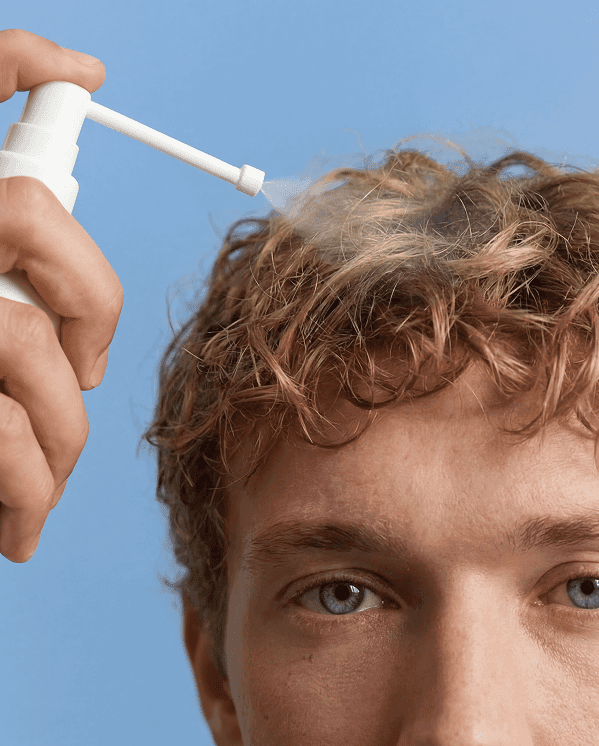
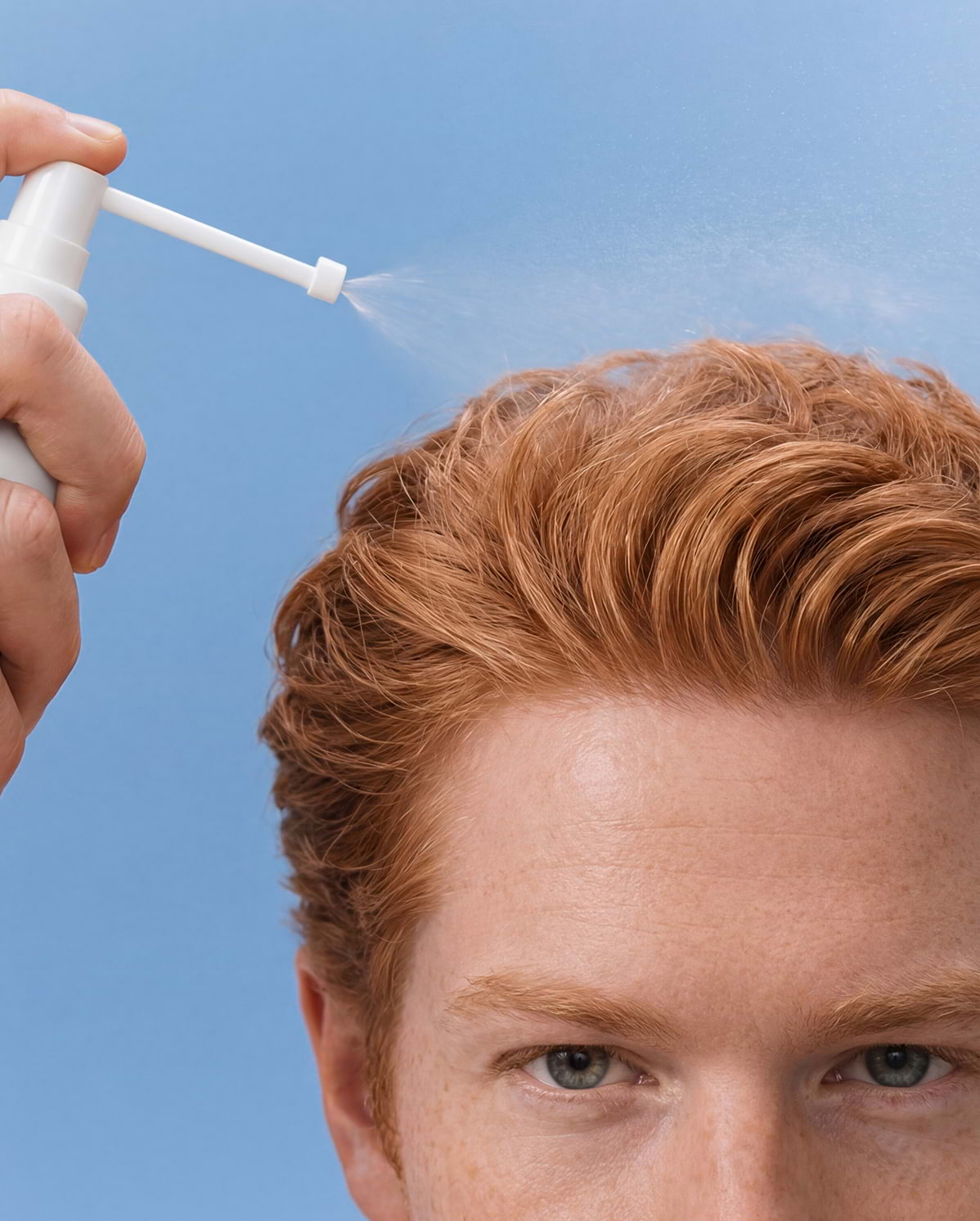
Minoxidil, on the other hand, is a topical solution applied directly to the scalp twice daily. It works as a vasodilator: it widens blood vessels in the scalp, allowing more oxygen and nutrients to reach the hair follicles⁵.
Minoxidil also prolongs the growth phase of hair and activates dormant follicles. It pushes hairs in the resting phase into the shedding phase so that new, healthier hairs can grow⁵.
The fundamental difference
Finasteride addresses the problem at its cause - it blocks the hormone that drives hair loss. Minoxidil addresses the symptom - it stimulates hair growth despite the presence of DHT. This different approach helps explain why using both treatments together can be so effective³.
Effectiveness: what does the science say?
Finasteride effectiveness is strong: 83% of men experience no further hair loss after two years of finasteride treatment¹. This figure comes from large-scale research and is one of the most cited findings in hair loss literature¹.
Topical minoxidil is also substantially effective: about 60% of men see improved scalp coverage after 48 weeks of using 5% minoxidil². This effectiveness has been demonstrated in placebo-controlled studies using objective measurements².
Head-to-head comparison
Direct comparative studies show that finasteride is generally more effective over the long term. One comparative study found finasteride to be more effective than minoxidil in men with mild to severe hair loss⁶.
The timing is different
Here’s an important nuance: minoxidil works faster. Many users see improvement within three months, while finasteride typically takes 3–6 months before visible results appear⁶. For men who want quicker visible changes, this can be a relevant consideration.
The power of combination therapy
The most impressive figure: when finasteride and minoxidil are used together, 94% of men see improvement³. This is significantly higher than finasteride alone (83%) or (topical) minoxidil alone (60%) and underscores the strength of combination therapy¹˒²˒³.
Context matters
Both medications are clinically proven and internationally approved. The difference in effectiveness is relatively limited, and either can deliver excellent results depending on your individual situation¹˒².
Taking it: pill vs lotion
Ease of use differs significantly between the two treatments, and this can be a deciding factor.
Finasteride: simplicity
One tablet per day, ideally at the same time. Swallow it with water and you’re done. It doesn’t matter whether you take it in the morning or evening, as long as you’re consistent. You’re finished in about 30 seconds⁴.
For many men, this simplicity is appealing. It fits effortlessly into your routine - like brushing your teeth. It’s discreet, and it doesn’t interfere with showering or styling your hair.
Minoxidil: time investment
Twice a day - morning and evening - you apply the lotion to your scalp. You spread it over affected areas, massage it in gently, and allow it to absorb for at least four hours before washing your hair⁵.
This requires more discipline and planning. You need to wait until it dries before styling your hair. You can’t just jump in the shower right away. And it requires making time in the evening even when you’re tired.
The compliance factor
Studies show that adherence (using the treatment consistently as prescribed) is generally higher with finasteride than with minoxidil. The reason is simple: taking one pill a day is easier to maintain than applying a lotion twice daily⁶.
This isn’t a judgment - it’s human. If you know you struggle with complex routines, that may influence your decision.
Side effects: what are the differences?
Every medication has potential side effects. The question is: which side effects are more acceptable to you?
Finasteride: systemic, sexual
Because finasteride affects your hormone balance, side effects are systemic. The most common are reduced libido and erectile dysfunction. These occur in 1–2% of users, only slightly more often than in men receiving placebo⁴. It’s important to note that such symptoms can also be caused by stress, fatigue, or other factors. Even less common side effects include ejaculation disorders, breast tenderness, allergic reactions, testicular pain, temporary reduced fertility (very rare, reversible on discontinuation), and mood swings or depression.
These percentages are low, but for some men sexual side effects - however rare - are a dealbreaker. That’s completely understandable.
The good news: in the vast majority of cases, these side effects resolve within a few weeks after stopping⁴.
Minoxidil: local, skin-related
Because minoxidil is topical, side effects are mainly local⁵:
Scalp irritation, itching (up to 10%)
Dry scalp (commonly reported)
Unwanted facial hair growth if the lotion gets on your face
Headache (occasionally reported)
Heart palpitations (very rare)
Which side effects are more acceptable to you?
This is personal. Some men would rather deal with local scalp irritation than accept any risk of sexual side effects. Others find an itchy scalp more bothersome than a small chance of reduced libido.
There is no right or wrong answer - it depends on your priorities and lifestyle.
Who is finasteride best for?
Finasteride is often the first choice for men who:
Have hereditary hair loss with DHT sensitivity
If your hair loss follows the classic male pattern (crown, hairline), DHT is likely the cause. Finasteride addresses this directly at the source with 80%+ effectiveness¹.
Want simplicity
One pill per day fits effortlessly into any routine. For men with busy schedules or little patience for elaborate haircare, this is ideal.
Want to focus on stopping hair loss
Finasteride is proven effective at stopping further progression. If your primary goal is “maintain what I have,” finasteride scores highly¹.
Don’t mind a small risk of sexual side effects
If you consider the 1–2% risk of libido or erectile changes acceptable, finasteride is a strong option. For many men, the trade-off is worth it.
Think long term
Finasteride is proven safe and effective for use over multiple years. If you want a long-term solution, its track record is excellent¹.
Who is minoxidil best for?
Minoxidil is often preferred by men who:
Prefer not to take a pill
For men who are hesitant about oral medication or hormonal treatments, minoxidil offers a non-systemic alternative.
Prefer local treatment
The idea of a local treatment - only where needed, directly on the scalp - appeals to some men more than systemic medication.
Want faster visible results
Minoxidil works faster: many men see improvements within three months, versus 3–6 months for finasteride⁶.
Want to avoid potential sexual side effects
If you prefer to avoid even a small potential risk of sexual side effects, minoxidil is a logical choice.
Can commit to twice-daily application
If you have the discipline and are willing to invest time twice a day in your hair routine, minoxidil can work very well⁵.
Want to start without a prescription
In many countries, minoxidil is available over the counter. In the Netherlands, we still recommend medical consultation, but it is more accessible than finasteride.
Or combine finasteride en minoxidil for maximum results?
Here’s the interesting part: finasteride or minoxidil doesn’t necessarily have to be an either/or decision. You can combine them.
The science behind the combination
Because finasteride and minoxidil work through different mechanisms - blocking DHT versus stimulating blood flow - they complement each other. You tackle hair loss from two angles at once³.
And the numbers speak for themselves: while finasteride alone has 83% effectiveness and minoxidil 60%, as many as 94% of men using both see improvement¹˒²˒³. That’s a significant difference.
The dutasteride + minoxidil combination
In addition to the classic finasteride–minoxidil combination, Menkind also offers dutasteride with minoxidil. Dutasteride works similarly to finasteride but blocks more DHT (about 90% vs 70%)⁴. For men who tried finasteride without sufficient results - or who want to start with the strongest DHT blockade - this may be an option.
Who is combination therapy for?
Combination therapy is ideal for men who:
Want maximum results
Are willing to invest both time (twice-daily minoxidil) and money (both treatments)
Have moderate to severe hair loss
Have tried finasteride alone with limited success
The question of which hair growth treatment is best therefore depends on your goals and situation. Want to learn more about how combination therapy works, what it costs, and how to start? Read our in-depth article on combining finasteride and minoxidil for the best results.
Conclusion
Finasteride and minoxidil are both clinically proven, effective treatments for hair loss, but they work in fundamentally different ways. Finasteride blocks DHT at the source with 83% effectiveness, while (topical) minoxidil stimulates blood flow with 60% effectiveness¹˒².
The choice depends on your priorities: if you want simplicity and long-term results, finasteride scores well. If you want faster results and no hormonal treatment, minoxidil is a strong candidate. And if you want maximum effectiveness, the combination of both - with 94% effectiveness - or dutasteride with minoxidil represents the gold standard³.
There is no universal “best” answer. The best treatment is the one that fits your body, lifestyle, and goals. The BIG-registered doctors at Menkind can guide you through this choice and create a treatment plan tailored to you. Ready to begin? Start with an online consultation and discover which treatment - or combination - fits you best.
References
1. Shapiro, J., & Kaufman, K. D. (2003). Use of finasteride in the treatment of men with androgenetic alopecia (male pattern hair loss). Journal of Investigative Dermatology Symposium Proceedings, 8(1), 20-23. https://pubmed.ncbi.nlm.nih.gov/12894990/
2. Olsen, E. A., Dunlap, F. E., Funicella, T., et al. (2002). A randomized clinical trial of 5% topical minoxidil versus 2% topical minoxidil and placebo in the treatment of androgenetic alopecia in men. Journal of the American Academy of Dermatology, 47(3), 377-385. https://pubmed.ncbi.nlm.nih.gov/12196747/
3. Hu, R., Xu, F., Sheng, Y., Qi, S., Han, Y., Miao, Y., ... & Chen, X. (2015). Combined treatment with oral finasteride and topical minoxidil in male androgenetic alopecia: a randomized and comparative study in Chinese patients. Dermatologic Therapy, 28(5), 303-308. https://pubmed.ncbi.nlm.nih.gov/26031764/
4. Zito, P. M., Bistas, K. G., & Syed, K. (2022). Finasteride. StatPearls. https://www.ncbi.nlm.nih.gov/books/NBK513329/
5. Badri, T., Nessel, T. A., & Kumar, D. D. (2021). Minoxidil. StatPearls. https://www.ncbi.nlm.nih.gov/books/NBK482378/
6. Arca, E., Acikgoz, G., Tastan, H. B., Kose, O., & Kurumlu, Z. (2004). An open, randomized, comparative study of oral finasteride and 5% topical minoxidil in male androgenetic alopecia. Dermatology, 209(2), 117-125. https://pubmed.ncbi.nlm.nih.gov/15316165/