Weight loss
GLP-1 medication in men vs women: differences in effectiveness
GLP-1 medications such as Wegovy, Ozempic, and Mounjaro are effective for weight loss, but results differ between men and women. Research shows that women tend to lose more total body weight on average, but also experience side effects more frequently. Men, on the other hand, often see greater reductions in visceral fat and cardiometabolic risk. This article explains what these differences mean.
LAST UPDATE
MEDICALLY REVIEWED BY
Arthur Bijleveld, general practitioner
TIME
6 min
read
KEY WORDS
• GLP-1 medication men women • Wegovy effectiveness men • Weight loss medication differences • Visceral fat GLP-1 • Side effects men women
How does GLP-1 medication work in men?
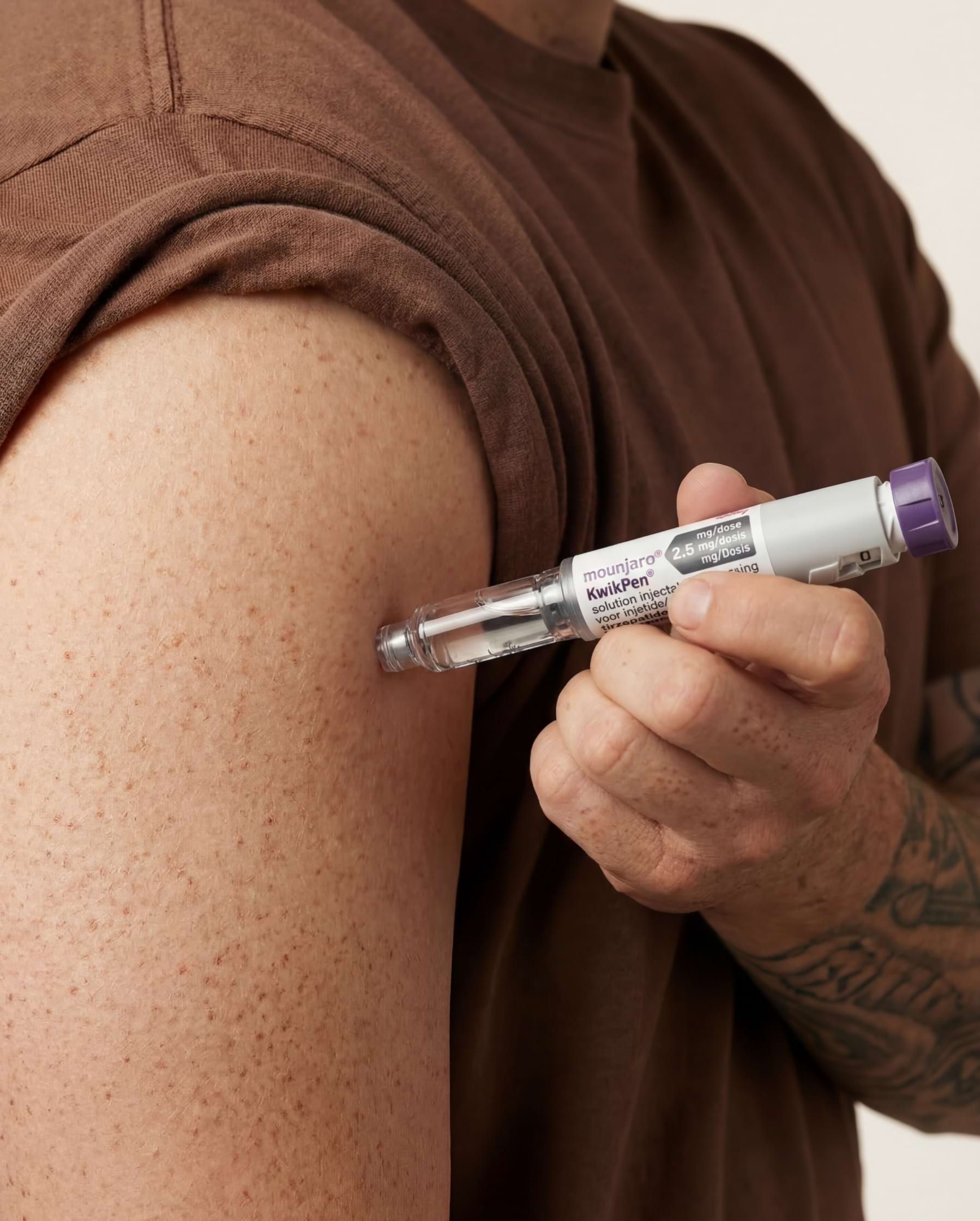
GLP-1 medications - such as semaglutide (Wegovy, Ozempic) and tirzepatide (Mounjaro) - mimic the natural hormone GLP-1. This hormone plays a crucial role in regulating appetite, satiety, and blood sugar levels. At Menkind, these medications are available as part of a medically supervised program.
When you use GLP-1 medication, three key processes occur in your body. First, insulin release is stimulated when your blood sugar rises after eating. Second, the medication slows gastric emptying, helping you feel full for longer. Third, it directly affects the brain to reduce appetite.
For men, this mechanism works in principle the same as for women. However, the effects can differ due to biological factors such as hormones, body composition, and metabolism. Research shows that men may experience specific benefits, particularly in relation to visceral fat and cardiometabolic health⁴.
Research findings: men vs women
Research shows clear differences between men and women in response to GLP-1 treatment. In studies with Wegovy (semaglutide), women generally respond better than men. An analysis of the STEP trials found that weight loss compared to placebo was −14.0% in women versus −8.0% in men¹.
However, this does not tell the full story. At higher doses of GLP-1 medication, researchers observed that women lost more total weight on average, while men lost significantly more visceral fat³. This distinction is important: visceral fat around the organs increases the risk of cardiovascular disease more than the subcutaneous fat that women typically lose.
Recent research confirms clear sex-specific differences⁴. Men often achieve greater improvements in cardiometabolic risk factors such as blood pressure, triglycerides, and insulin sensitivity. This is important because these factors are directly linked to cardiovascular disease - one of the leading causes of death in men.
Why do women lose more total weight?
There are several explanations for why women tend to lose more total weight in studies. First, women generally have a lower body weight. With medication, this means the same dose results in a higher concentration in the body, which may lead to stronger effects.
Hormones also play a role. GLP-1 receptors are influenced by sex hormones. Estrogen appears to increase sensitivity to GLP-1, potentially making the medication more effective in women for satiety and appetite regulation.
Additionally, men have more muscle mass on average. During weight loss, both fat and muscle are lost. In men, muscle loss contributes less to total weight loss because they start with more muscle mass. This means men tend to lose relatively more fat (which is healthier), but this is not always immediately reflected on the scale.
Visceral fat: where men benefit more
This is where things become particularly relevant for men. Visceral fat - the dangerous fat surrounding abdominal organs - is the primary health concern in male obesity⁵. This fat produces inflammatory substances and increases the risk of diabetes, cardiovascular disease, and metabolic syndrome⁶.
Studies consistently show that men lose significantly more visceral fat than women during GLP-1 treatment³,⁴. This is a major advantage. Visceral fat is metabolically active and more harmful than the subcutaneous fat more common in women. Losing visceral fat directly improves insulin sensitivity, blood pressure, and cholesterol levels.
In practice, this means: as a man, you may see less dramatic changes on the scale, but the health benefits are substantial. Your waist circumference decreases, your blood markers improve, and your cardiovascular risk declines. This is precisely why focusing solely on total weight loss is too simplistic.
Side effects: are there differences between men and women?
Differences also appear in side effects. Research suggests that women more frequently experience gastrointestinal side effects such as nausea, vomiting, and diarrhea².
For men, the most common side effects are mild and usually temporary: slight nausea in the first weeks, reduced appetite (which is the intended effect), and occasionally some fatigue during the adjustment phase. Most men tolerate GLP-1 medication well, especially when the dosage is gradually increased.
Important to know: side effects typically decrease after the first 4–8 weeks as your body adapts to the medication. At Menkind, we always increase dosage gradually according to medical guidelines to minimize side effects. And you are not alone - our BIG-registered doctors monitor your progress and adjust treatment if needed.
Combining with lifestyle: why it is crucial for men
GLP-1 medication is not a standalone solution. For optimal results, it must be combined with lifestyle changes. For men, there are specific focus areas that make a significant difference.
Strength training is essential
Men have a natural advantage in building muscle mass. During weight loss with GLP-1 medication, strength training helps preserve muscle and maintain a higher metabolism. Studies show that protein intake is crucial during weight loss⁷. Aim for at least 1.6 grams of protein per kilogram of body weight.
Alcohol consumption is a key factor
Alcohol contains many empty calories and inhibits fat burning. During GLP-1 treatment, it can also exacerbate side effects such as nausea. Limit alcohol to a few days per week for optimal results.
Sleep is often underestimated but critica
Insufficient sleep increases hunger and lowers testosterone production in men. Aim for at least 7–8 hours of sleep per night. This supports both weight loss and overall health and energy levels.
What can you expect as a man?
The results of GLP-1 treatment depend heavily on the specific medication, dosage, and your individual situation. For more details, see the article comparing Wegovy, Ozempic, and Mounjaro. Always work with your doctor to determine a treatment plan that suits you.
Research shows that men often experience benefits beyond weight loss. In addition to losing weight, improvements are frequently seen in health markers such as blood pressure and blood glucose levels¹². For some men, the reduction of visceral fat - the dangerous abdominal fat around organs - is the most important health gain.
It is important that weight loss occurs gradually. This helps preserve muscle mass and allows your body time to adapt. Your doctor will monitor your progress and adjust the treatment plan as needed.
The most noticeable change is often in your waist circumference. Men lose significant visceral fat, which translates into a smaller waistline⁵. This is a better indicator of health improvement than the scale alone. Therefore, measure your waist as well - you will likely notice your belt tightening over time.
Important to remember: results vary per individual. Age, starting weight, medication adherence, and lifestyle all play a role. At Menkind, you receive personalized guidance from BIG-registered doctors who optimize your treatment based on your specific situation.
GLP-1 medication works differently in men than in women, but this is not a disadvantage. As a man, you particularly benefit from losing harmful visceral fat and improving cardiometabolic health. Combine medication with strength training, sufficient protein intake, and healthy sleep for optimal results. At Menkind, we guide you personally through this weight loss journey - discreet, online, and medically responsible.
REFERENCES
1. Jensterle M, et al. (2023). Semaglutide in Obesity: Unmet Needs in Men. Diabetes Therapy, 14(3):461-465. https://link.springer.com/article/10.1007/s13300-022-01360-7
2. Kantowski T, et al. (2024). Obesity Management: Sex-specific Considerations. Archives of Gynecology and Obstetrics, 309:1745-1752. https://link.springer.com/article/10.1007/s00404-023-07367-0
3. Milani I, et al. (2024). Sex-differences in Response to Treatment with Liraglutide 3.0mg. Journal of Clinical Medicine, 13(12):2269. https://pmc.ncbi.nlm.nih.gov/articles/PMC11204191
4. Rentzeperi E, et al. (2022). Sex Differences In Response To Treatment With Glucagon-like Peptide 1 Receptor Agonists. Journal of Personalised Medicine, 12(3):454. https://www.mdpi.com/2075-4426/12/3/454
5. Batra A, et al. (2012). The Role of Visceral Fat. Digestive Diseases, 30(1):70-74. https://doi.org/10.1159/000335722
6. Nauli AM, Matin S. (2019). Why Do Men Accumulate Abdominal Visceral Fat? Frontiers in Physiology, 10:1486. https://doi.org/10.3389/fphys.2019.01486
7. Leidy HJ, et al. (2015). The role of protein in weight loss and maintenance. The American Journal of Clinical Nutrition, 101(6):1320S–1329S. https://pubmed.ncbi.nlm.nih.gov/25926512/