Weight loss
GLP-1/GIP medication: How long does it take to see results?
GLP-1/GIP medications such as Ozempic, Wegovy, and Mounjaro start working in your body within hours, but visible results take time. You usually feel changes in appetite within 2–5 days. The first weight loss is typically seen after 2–4 weeks. Most people lose about 2% of their body weight in the first month, 5–7% after three months, and 10–17% after 6–12 months. Peak effectiveness is reached around 60–68 weeks. This article provides a realistic week-by-week and month-by-month timeline of what to expect and explains which factors influence how quickly you see results.
LAST UPDATE
MEDICALLY REVIEWED BY
Arthur Bijleveld, general practitioner
TIME
7 min
read
KEY WORDS
• How long does GLP-1 take • GLP-1 results • When does Ozempic work • Wegovy timeline • GLP-1 weight loss timeline
When does GLP-1 medication start working in your body?
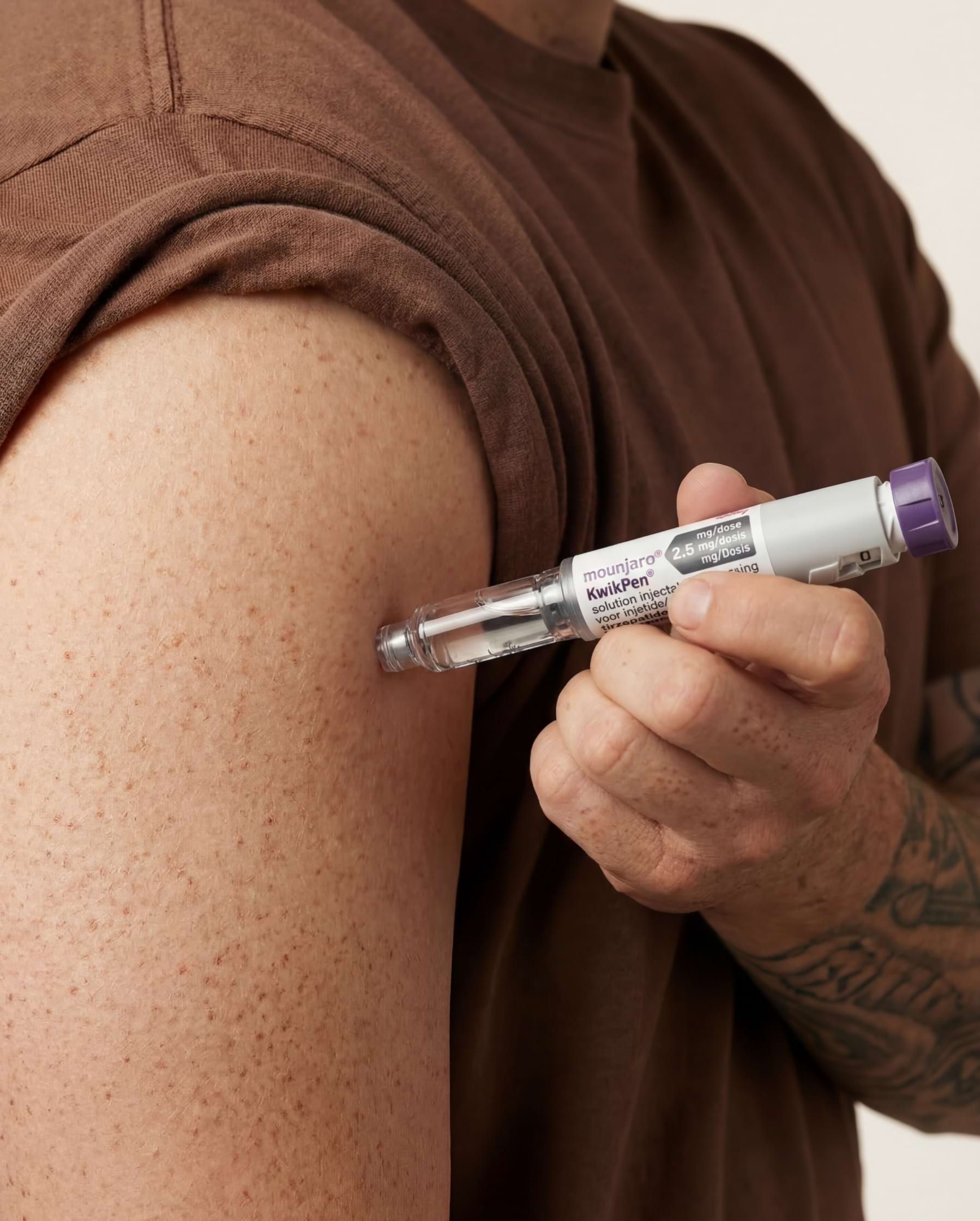
GLP-1 medications begin working biologically as soon as you take them. After your first injection or tablet, the active ingredient enters your bloodstream. Ozempic and Wegovy reach peak concentration within 1–3 days, while Rybelsus does so within an hour². The medicijn binds directly to GLP-1 receptors in your stomach, intestines, and brain.
It’s important to understand: biological activity is not the same as visible results. The medication immediately starts slowing gastric emptying and changing appetite signals.
But weight loss - what you see on the scale - takes time.
GLP-1 medications are always titrated up gradually. You start on a low dose (often 0.25 mg) and increase every four weeks¹. This gives your body time to adjust, reduces side effects, and allows effectiveness to build gradually. The highest dose provides the most effectiveness, however it's important to gradually build up the medication to balance effectiveness and side effects. This offers the best long-term results.
Keep realistic expectations: this is not an instant solution. The first weeks are an adjustment phase. The effect accumulates over time. Patience is essential for success.
The first effects you feel (day 1 – week 4)
Within 2–5 days, many people notice the first changes in appetite². You feel less hungry between meals, get full faster while eating, and experience fewer cravings for unhealthy foods. The constant “food noise” - thoughts about food - decreases. Some people feel this almost immediately; others only after 1–2 weeks.
In weeks 1–2, you may also notice physical changes. You might experience side effects such as nausea, especially in the first few days. You may feel less hungry in the morning. Slower digestion becomes noticeable - food sits longer in your stomach. Smaller portions feel sufficient. Your energy may temporarily dip while your body adjusts.
Between weeks 2–4, you often see the first weight loss¹. The scale starts moving - usually around 0.5–1 kg per week. Not everyone sees this right away; fluctuations are normal. Focus on the trend over weeks, not day-to-day numbers.
Don’t get frustrated if you see little change in this phase. Your body is adapting. Effects vary widely between individuals. Side effects do not mean the medication is working better or worse.
Month-by-month timeline: What to expect
Below is a realistic month-by-month timeline based on clinical studies¹˒³˒⁴:
Month 1 (Dose 0.25 mg)
Average weight loss: about 2% of your body weight. Example: from 100 kg to 98 kg (2 kg lost). Appetite changes are now clearly noticeable. Side effects can be at their worst. The focus is on adapting to the medication.
Month 2 (Dose 0.5 mg)
Cumulative: about 3–4% weight loss. Example: from 100 kg to 96–97 kg. The pace increases with the higher dose. Side effects begin to improve. Your clothes may start to feel looser.
Month 3 (Dose 1 mg)
Cumulative: about 5–7% weight loss¹. Example: from 100 kg to 93–95 kg. Others start noticing the change. Your energy improves. The routine feels more normal.
Months 4–6 (Dose 1.7–2.4 mg)
Cumulative: about 8–12% weight loss. Example: from 100 kg to 88–92 kg. The change is now visibly significant. You reach the higher doses. The rate of weight loss tends to stabilize.
Months 7–12 (Maintenance dose)
Cumulative: about 10–17% weight loss³. Example: from 100 kg to 83–90 kg. Peak effectiveness is reached around weeks 60–68. Some people reach a plateau. Further improving lifestyle becomes crucial for continued progress.
Differences between Ozempic, Wegovy, and Mounjaro
The speed of weight loss differs by medication¹˒⁴˒⁵:
Wegovy (most effective for weight loss)
Month 1: ~2% weight loss. Month 3: ~6–7%. Month 6: ~11–13%. Week 68: average 15–17% weight loss¹. The highest dose (2.4 mg) is optimized for weight loss, leading to the fastest visible results.
Mounjaro (possibly faster)
Month 1: ~2–3% weight loss. Month 3: ~7–9%. Month 6: ~12–15%. Week 72: 15–22.5% weight loss (dose-dependent)⁴. The dual action (GLP-1 + GIP) may be even more effective. The speed is comparable to, or higher than, Wegovy.
Ozempic (lower maximum dose)
Month 1: ~1.5–2% weight loss. Month 3: ~5–6%. Month 6: ~8–10%. After 10 months: 10–15% weight loss with off-label use⁵. The maximum dose is 2 mg (vs 2.4 mg for Wegovy), which makes it slightly slower but still effective.
What influences how quickly you see results?
Several factors determine how quickly you see results²˒⁴:
Starting weight matters
More weight to lose often means faster initial results. The percentages are similar, but the absolute kilograms differ. For example, with a 10% loss, someone starting at 120 kg loses 12 kg, while someone starting at 80 kg loses 8 kg.
Dose and titration speed are crucial
Higher doses mean a stronger effect. Faster titration can produce quicker results but more side effects. Slower titration reduces side effects but may be slightly slower. Reaching peak dose is essential for maximum effect.
Lifestyle combination makes the difference⁴
Medication alone delivers about 70% of potential results. Combining it with nutrition changes and exercise brings you closer to 100%. A protein-rich diet helps protect muscle mass. Regular movement accelerates weight loss.
Metabolism and age play a role
A faster metabolism can produce faster results. Younger people often respond sooner. Men typically lose weight faster than women. More muscle mass helps because it increases daily calorie burn.
Sleep and stress matter more than you think
Poor sleep slows weight loss. High stress raises cortisol, which promotes weight retention. 7–8 hours of sleep per night is optimal. Active stress management supports the process.
Adherence may be the most important factor
Consistent injections on the same day each week are crucial. Missed doses significantly slow results. With Rybelsus, correct intake (on an empty stomach) is essential. Patience with the process ultimately determines success.
What if your results are slower than expected?
First, it’s important to define “slower than expected”: less than 5% weight loss after 3 months, no change in appetite after 6 weeks, a plateau after only 5% loss, or weight gain despite medication⁶.
Possible causes include a dose that is still too low (you’re not yet at the maximum), compensatory behavior (unintentionally eating more), poor sleep or high stress, medication interactions, or - rarely - being a non-responder.
What can you do? Check adherence: are you taking the medication consistently? Review your nutrition: are you eating more than you think? Improve sleep. Address stress where possible. Add exercise to your lifestyle or increase intensity. Speak with your doctor about possible dose adjustments².
Consider switching if after 6 months you have lost significantly less than 10% or if losing weight slows down, you feel no appetite effect at the maximum dose, or you continue to have unacceptable side effects. A different GLP-1 may suit you better - for example, switching from Ozempic to Wegovy (higher dose), or from single-action to dual-action (Mounjaro)⁴.
Stay realistic: a 10–15% weight loss is a success. Not everyone responds the same way. Plateaus are normal and part of the process. Long-term focus matters more than short-term numbers. Non-scale victories count too - more energy, better-fitting clothes, improved health markers.
Realistic expectations and guidance at Menkind
At Menkind, our doctors help you set realistic expectations for your weight loss journey. We monitor your progress monthly and can adjust your treatment if results lag behind. This may mean a different titration pace, lifestyle optimization, or switching to a different GLP-1 medication that fits you better.
We understand that patience can be challenging. That’s why we provide ongoing support through our online platform, where you can ask questions and get tips to optimize results. Our goal isn’t just weight loss, but sustainable change that fits your life. Start an intake today and discover how quickly you can see results with professional medical guidance.
References
1. Wilding, J. P. H., Batterham, R. L., Calanna, S., et al. (2021). Once-weekly semaglutide in adults with overweight or obesity. New England Journal of Medicine, 384(11), 989–1002. https://pubmed.ncbi.nlm.nih.gov/33567185/
2. Jabbour, S., Paik, J. S., Aleppo, G., et al. (2024). Switching to Tirzepatide 5 mg From Glucagon-Like Peptide-1 Receptor Agonists: Clinical Expectations in the First 12 Weeks of Treatment. Endocrine Practice, 30(8), 701–709. https://doi.org/10.1016/j.eprac.2024.05.005
3. Garvey, W. T., Batterham, R. L., Bhatta, M., et al. (2022). Two-year effects of semaglutide in adults with overweight or obesity: the STEP 5 trial. Nature Medicine, 28(10), 2083–2091. https://pubmed.ncbi.nlm.nih.gov/36216945/
4. Wadden, T. A., Chao, A. M., Machineni, S., et al. (2023). Tirzepatide after intensive lifestyle intervention in adults with overweight or obesity: The SURMOUNT-3 phase 3 trial. Nature Medicine, 29(10), 2909–2918. https://doi.org/10.1038/s41591-023-02597-w
5. Aroda, V. R., Ahmann, A., Cariou, B., Chow, F., Davies, M. J., Jódar, E., et al. (2019). Comparative efficacy, safety, and cardiovascular outcomes with once-weekly subcutaneous semaglutide in the treatment of type 2 diabetes: Insights from the SUSTAIN 1–7 trials. Diabetes & Metabolism, 45(5), 409–418. https://doi.org/10.1016/j.diabet.2018.12.001
6. Rubino, D., Abrahamsson, N., Davies, M., et al. (2021). Effect of continued weekly subcutaneous semaglutide vs placebo on weight loss maintenance in adults with overweight or obesity: The STEP 4 randomized clinical trial. JAMA, 325(14), 1414–1425. https://pubmed.ncbi.nlm.nih.gov/33755728/