Weight loss
How much weight can you lose with Ozempic? Results & expectations
Ozempic can be effective for weight loss, but what can you realistically expect? On average, people lose up to 10–15% of their body weight, with first results often visible within 4–8 weeks. Maximum effect is usually reached after 6–12 months. It’s important to know that results vary per person and are best when Ozempic is combined with healthy nutrition and regular physical activity. In this article, we explain how much weight you can lose, when you’ll see results, and how to optimize your outcomes.
LAST UPDATE
MEDICALLY REVIEWED BY
Arthur Bijleveld, general practitioner
TIME
6 min
read
KEY WORDS
• How much weight can you lose with Ozempic • Ozempic results • Ozempic weight loss percentage • Ozempic expectations • When do you see results with Ozempic
How much weight do you lose on average with ozempic?
Based on large-scale clinical studies, we know that Ozempic leads to an average weight loss of 10–15% of body weight¹². These are concrete figures you can rely on, provided you combine treatment with a healthy lifestyle.
The weight-loss effects of semaglutide (such as Ozempic) have been extensively studied in the STEP trials. In these studies, 37–66% of participants lost at least 5% of their body weight, and 13–26% lost 10% or more of their body weight.¹. Another study showed that people lost an average of 6–7 kg in the first 10 months.
To make this concrete:
Starting weight of 100 kg: 10–15 kg weight loss possible
Starting weight of 120 kg: 12–18 kg weight loss possible
Starting weight of 90 kg: 9–13.5 kg weight loss possible
For comparison, participants in the placebo group lost only 2–4% of their weight in the same studies¹. Ozempic is therefore significantly more effective than diet and exercise alone.
Important to know: these are averages. Some people lose more, others less. Both outcomes are successful. Even 5–10% weight loss already delivers important health benefits, such as improvements in blood pressure, cholesterol, and blood sugar levels³.
When will you see the first results?
The Ozempic results timeline differs by phase:
First Week
Many people notice a reduced appetite within 1–3 days⁴. You feel full more quickly after meals and have fewer cravings for snacks. This is the first sign that Ozempic is working.
First Month (Weeks 1–4)
Initial weight loss becomes visible. On average, people lose about 2% of their body weight during this period¹. This happens at the low starting dose of 0.25 mg, so the effect is still modest but noticeable.
Months 2–3
Your dosage is gradually increased and your body adapts to the medication. Weight loss steadily builds. This is the phase where new, healthier eating habits develop.
Months 3–6
This is the period in which most weight loss occurs. You are now on a higher dose, and the combined effects of medication and lifestyle changes become clearly visible.
Months 6–12
Weight loss stabilizes and you reach your maximum effect³. The focus shifts from losing weight to maintaining results and further improving overall health.
Which factors influence how much weight you lose?
Not everyone loses the same amount of weight with Ozempic. These factors play a role:
Dosage: Higher doses are more effective. Studies show a clear dose-dependent effect - people on 2 mg lose more than those on 1 mg
Starting weight and BMI: Higher starting weight leads to more absolute weight loss, although percentages remain similar
Diabetes vs. no diabetes: People without type 2 diabetes tend to lose slightly more weight than those with diabetes
Lifestyle: Healthy nutrition and regular exercise significantly enhance the effect
Consistency: Weekly injections at a fixed time, without skipping doses
Personal factors: Metabolism, genetics, age, and dieting history also influence results
The good news: many of these factors are within your control. Combining Ozempic with conscious food choices and sufficient physical activity delivers the best results⁵.
Is the weight loss gradual or rapid?
Ozempic causes gradual weight loss, and that is intentional. A healthy pace is 0.5–1% of body weight per week. This helps prevent muscle loss and supports more sustainable results³.
Important to know: progress is not linear. Some weeks you lose more, other weeks less. Plateaus are normal and do not mean the medication isn’t working. Your body needs time to adapt.
Why Gradual Is Better:
You primarily lose fat mass rather than muscle or water
Your body adapts to the new weight
Lower risk of weight regain after stopping
Healthier for your organs and metabolism
Compared to crash diets - which often lead to a yo-yo effect - Ozempic offers sustainable weight loss while preserving health benefits⁶.
How Can You Maximize Your Results?
Ozempic works best when combined with healthy habits. Here are practical tips:
Nutrition
Eat protein-rich foods to preserve muscle mass (fish, chicken, eggs, legumes)
Choose fiber-rich foods (vegetables, fruit, whole grains)
Avoid ultra-processed foods and sugary drinks
Drink 2–3 liters of water per day
Pay attention to portion sizes - Ozempic helps by increasing satiety
Physical Activity
Strength training 2–3 times per week helps prevent muscle loss
Cardio supports calorie burn (walking, cycling, swimming)
Aim for 10,000 steps per day
Stay active - every movement counts
Sleep and Stress
Get 7–9 hours of sleep per night
Manage stress through meditation, breathing exercises, or yoga
Chronic stress increases cortisol, which can hinder weight loss
Using Medication Optimally
Take your injection at the same time every week
Increase dosage only as prescribed
Do not skip doses
Manage side effects using tips from our side-effects article
What Are Realistic Expectations?
To give you a concrete picture, here is a realistic timeline based on research¹³:
First 3 months: 5–8% weight loss
First 6 months: 8–12% weight loss
After 12 months: 10–15% weight loss
Remember: individual variation is large. Some people lose 20% or more, others 5–8%. Both outcomes are successful. Why? Because even 5% weight loss is clinically significant and delivers major health benefits⁵:
Improved blood pressure
Lower cholesterol
Better blood sugar control
Reduced risk of cardiovascular disease
More energy and improved quality of life
Do not compare yourself to others - especially not to extreme results on social media. These often present a distorted picture. Focus on your own progress and the health improvements you notice.
Maintain a long-term perspective: this is a marathon, not a sprint. It’s not about how fast you lose weight, but about sustainable change. Behavioral change ultimately matters more than the number on the scale⁶.
Are your results disappointing? Discuss this with your doctor. Your dosage may need adjustment, or another GLP-1 medication may be more suitable. Re-evaluating lifestyle factors is also worthwhile - there is often room for improvement there.
Start Your Weight Loss Journey With Menkind
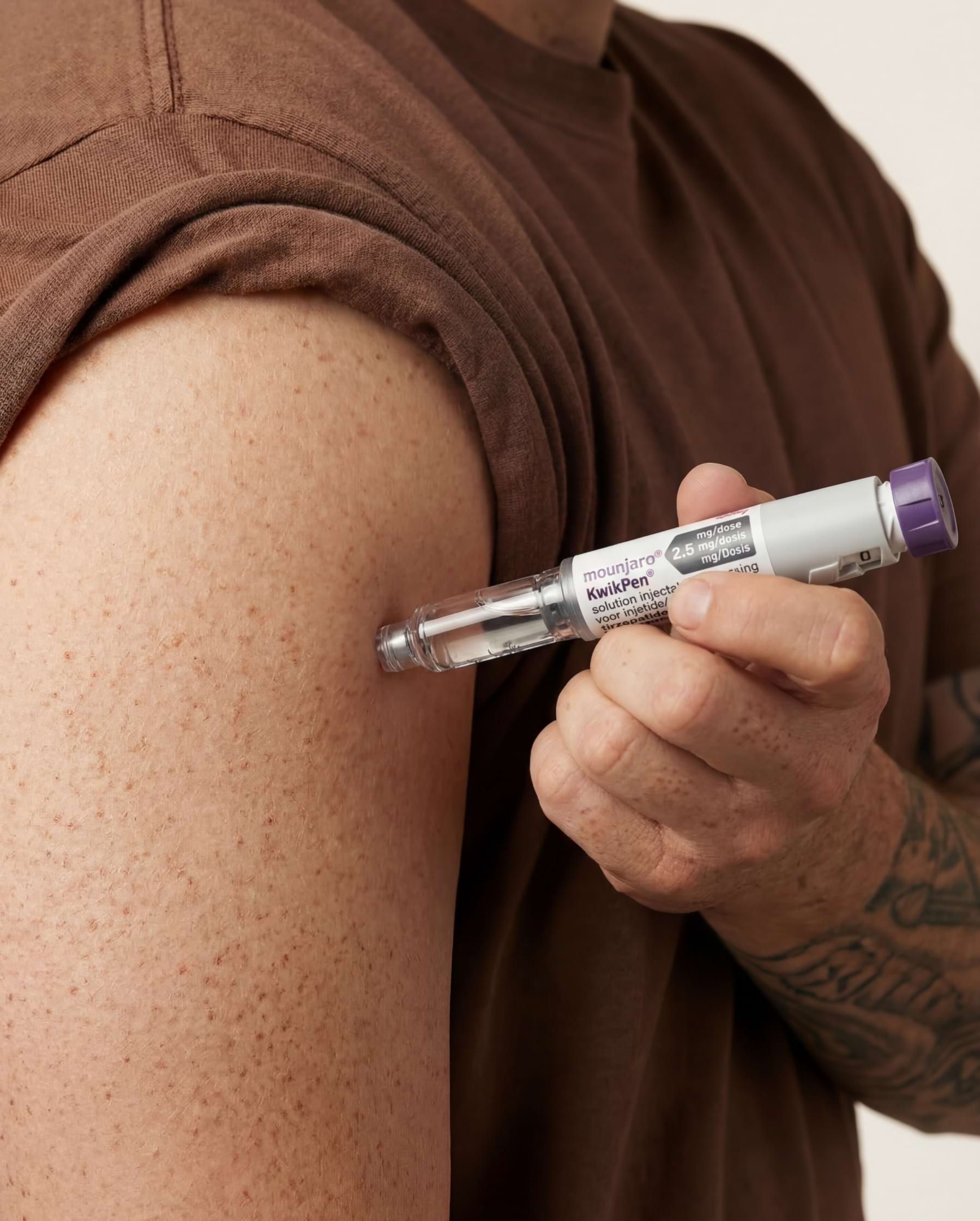
At Menkind, we guide men through weight loss using GLP-1 medications such as Ozempic, Wegovy, Mounjaro and Rybelsus. Our registered doctors assess your situation and create a treatment plan tailored to you. You receive access to medical supervision, progress monitoring, and an extensive knowledge base.
Our platform is fully online, allowing you to get support anytime, anywhere. Start with an intake today and discover which treatment suits you best. We’re here to help.
References
1. Wilding, J. P. H., Batterham, R. L., Calanna, S., et al. (2021). Once-weekly semaglutide in adults with overweight or obesity. New England Journal of Medicine, 384(11), 989–1002. https://pubmed.ncbi.nlm.nih.gov/33567185/
2. Davies, M., Færch, L., Jeppesen, O. K., et al. (2021). Semaglutide 2.4 mg once a week in adults with overweight or obesity, and type 2 diabetes (STEP 2): a randomised, double-blind, double-dummy, placebo-controlled, phase 3 trial. Lancet, 397(10278), 971–984. https://pubmed.ncbi.nlm.nih.gov/33667417/
3. Garvey, W. T., Batterham, R. L., Bhatta, M., et al. (2022). Two-year effects of semaglutide in adults with overweight or obesity: the STEP 5 trial. Nature Medicine, 28, 2083–2091. https://pubmed.ncbi.nlm.nih.gov/36216945/
4. Blundell, J., Finlayson, G., Axelsen, M., et al. (2017). Effects of once-weekly semaglutide on appetite, energy intake, control of eating, food preference and body weight in subjects with obesity. Diabetes, Obesity & Metabolism, 19(9), 1242–1251. https://pubmed.ncbi.nlm.nih.gov/28266779/
5. Qin, W., Yang, J., Deng, C., et al. (2023). Efficacy and safety of semaglutide 2.4 mg for weight loss in overweight or obese adults without diabetes: An updated systematic review and meta-analysis. Diabetes, Obesity and Metabolism, 25(12), 3743-3754. https://pubmed.ncbi.nlm.nih.gov/38016699/
6. Rubino, D., Abrahamsson, N., Davies, M., et al. (2021). Effect of continued weekly subcutaneous semaglutide vs placebo on weight loss maintenance in adults with overweight or obesity: The STEP 4 randomized clinical trial. JAMA, 325(14), 1414–1425. https://pubmed.ncbi.nlm.nih.gov/33755728/