Weight loss
What is GLP-1 and how does it work for weight loss?
GLP-1 is a natural hormone your body releases after eating that helps regulate appetite and blood sugar. GLP-1 medications such as Ozempic, Wegovy, and Mounjaro mimic this hormone and remain active in your body much longer. They work by reducing appetite, increasing feelings of fullness, slowing gastric emptying, and reducing food noise. Originally developed for type 2 diabetes, these medications are now also highly effective for weight loss. This article explains what GLP-1 is, how the mechanism works, which different medications exist, and who they’re suitable for.
LAST UPDATE
MEDICALLY REVIEWED BY
Arthur Bijleveld, general practitioner
TIME
7 min
read
KEY WORDS
• What is GLP-1 • GLP-1 weight loss • How does GLP-1 work • GLP-1 medication • GLP-1 agonist
What is GLP-1?
GLP-1 stands for Glucagon-Like Peptide-1. It is a natural hormone produced by cells in your intestines every time you eat¹. This hormone plays a crucial role in how your body handles food, hunger, and blood sugar.
Once in your bloodstream, GLP-1 has several important functions:
It stimulates your pancreas to produce insulin, which lowers blood sugar
It suppresses the release of glucagon, a hormone that normally raises blood sugar
It slows gastric emptying, so food stays in your stomach longer
It sends signals to your brain that essentially say: “you’ve had enough”
The issue with natural GLP-1 is that your body breaks it down very quickly - within minutes. Scientists therefore developed synthetic versions that remain active much longer⁶. These GLP-1 medications mimic the natural hormone but work for days rather than minutes.
Originally, these medications were developed in the 1990s and 2000s for people with type 2 diabetes. But physicians noticed an interesting “side effect”: people lost significant weight. This led to the development of GLP-1 medications specifically for weight loss⁶.
How do GLP-1 medications work for weight loss?
GLP-1 medications support weight loss through four mechanisms that work together¹˒²:
1. Appetite suppression
GLP-1 sends signals to your hypothalamus - the part of the brain that regulates hunger¹. This reduces your overall feeling of hunger. You simply feel less desire to eat, making it easier not to snack between meals.
2. Increased satiety
While eating, you feel full sooner. Smaller portions are enough to feel satisfied. This makes it much easier to stop eating before you overeat - your body sends the “I’ve had enough” signal earlier.
3. Slower gastric emptying
GLP-1 slows the rate at which food moves from your stomach to your intestines¹. This means you stay full longer after a meal. It also prevents sharp blood sugar spikes, which helps avoid energy crashes and rebound hunger.
4. Reduced food noise
Many people experience “food noise” - constant, sometimes intrusive thoughts about food. GLP-1 medications reduce this significantly. You think about food less often, have fewer cravings, and no longer feel driven to check the fridge or delivery apps.
The combined result of these four mechanisms: you naturally consume fewer calories without feeling like you’re on a strict diet. You’re simply less hungry, satisfied more quickly, stay full longer, and are less distracted by thoughts of food.
Different types of GLP-1 medications
There are two main categories of GLP-1 medications:
Single-action GLP-1 agonists
These act only on the GLP-1 hormone. The key examples are:
Semaglutide: available as Ozempic (diabetes, max 2 mg), Wegovy (weight loss, max 2.4 mg), and Rybelsus (oral, diabetes)
Liraglutide: available as Saxenda (weight loss, daily) and Victoza (diabetes, daily)
Dual-action GLP-1/GIP agonists
These act on two hormones simultaneously: GLP-1 and GIP (Glucose-dependent Insulinotropic Polypeptide). The main example is:
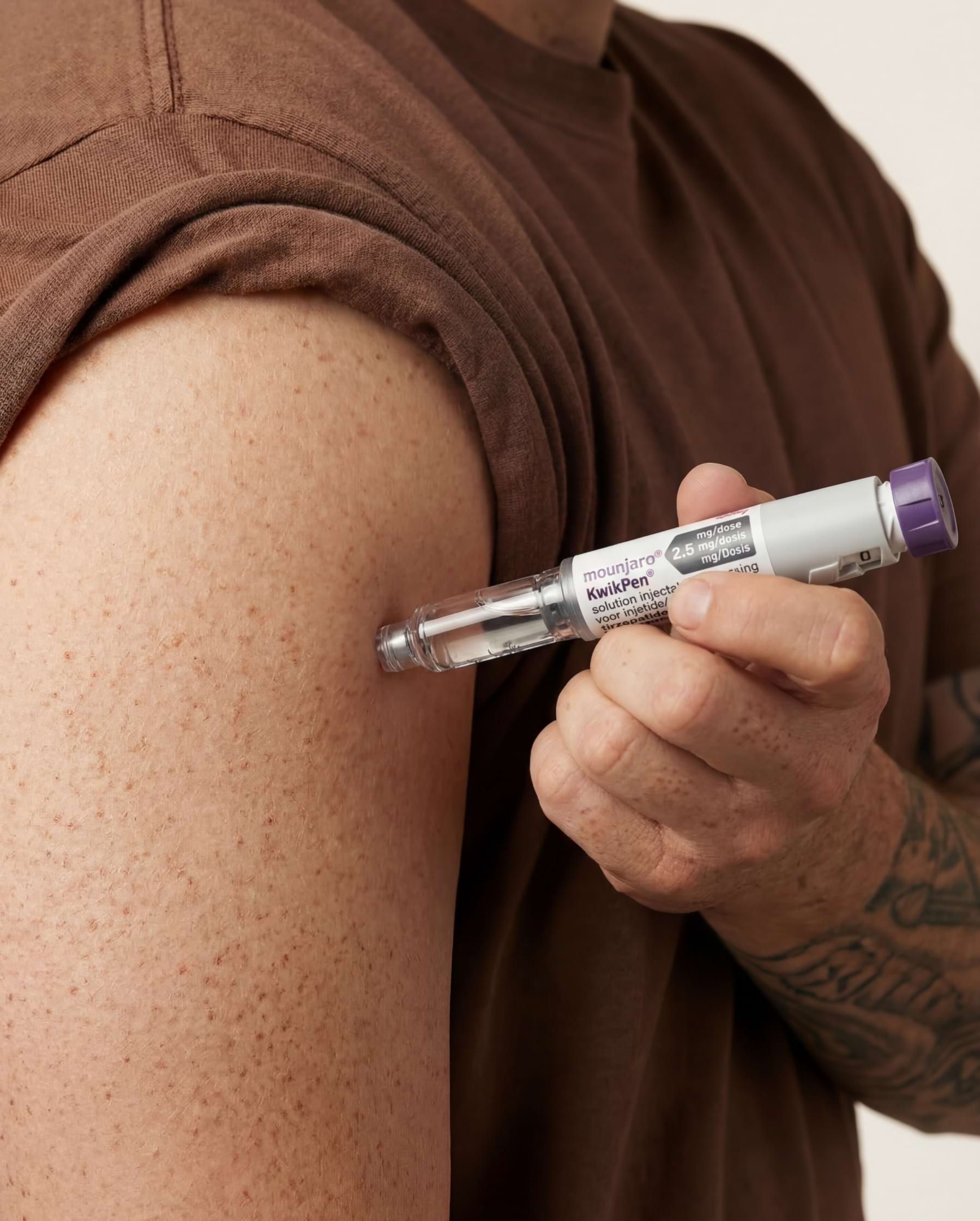
Tirzepatide: available as Mounjaro (diabetes and weight loss). The dual action may provide additional effects on fat metabolism and insulin sensitivity
The main differences between these medications are dosing frequency (weekly vs daily), form of administration (injection vs oral), and whether they are single- or dual-action⁶. Which option fits you best depends on your situation, goals, and preferences. Your doctor can help you make the right choice.
Why are GLP-1 medications so effective?
What’s unique about GLP-1 medications is that they address the problem from multiple angles at once. Instead of simply recommending “eat less” or “move more,” they change the biological mechanisms that regulate hunger and satiety¹˒².
The numbers speak for themselves:
Semaglutide (Wegovy 2.4 mg): ~15% average weight loss after 68–104 weeks. In studies with intensive lifestyle support or in a responder population, results were higher - up to around 16–17%
Tirzepatide (Mounjaro 15 mg): ~15–22.5% average weight loss after 72 weeks
Liraglutide (Saxenda): ~5–8% average weight loss
Placebo with diet and exercise only: just ~2–4% weight loss
Why does this work so much better than traditional dieting? With a diet, you’re fighting biological hunger with willpower. Your body notices you’re eating less and increases hunger hormones to push you to eat more. That’s why diets are so hard to sustain⁵.
GLP-1 medications work differently: they reduce biological hunger itself. You experience less internal “battle” with your body because the underlying drive to eat is reduced. This makes results more sustainable - you don’t feel constantly hungry or deprived.
Important: GLP-1 medications work best when combined with healthy nutrition and regular physical activity². The medication makes healthy choices easier - you feel less hungry so nutritious eating becomes more achievable, and you often have more energy so movement feels more doable.
What are the benefits of GLP-1 medications?
In addition to weight loss, GLP-1 medications offer several health benefits:
Weight loss
The primary benefit: significant and sustainable weight loss without extreme hunger. Most people find it much easier to stick with than traditional diets.
Blood sugar control
GLP-1 improves how your body produces and uses insulin. This leads to more stable blood sugar levels, and in people with diabetes, a lower HbA1c⁶.
Cardiovascular protection
Studies show that semaglutide reduces the risk of heart attack, stroke, and cardiovascular death⁴. This is especially important for people with overweight who also have cardiovascular disease.
Other health benefits
Lower blood pressure, improved cholesterol, reduced liver fat, potentially improved kidney function, and reduced sleep apnea symptoms have also been observed with GLP-1 medication use.
Quality of life
More energy, improved self-image, less joint pain, and better mobility are practical benefits many people experience after losing weight with GLP-1 medications.
Who are GLP-1 medications suitable for?
GLP-1 medications are available for adults (18+) who meet these criteria: a BMI of 30 or higher, or a BMI of 27 or higher with weight-related conditions such as type 2 diabetes or high blood pressure².
These medications are particularly suitable for people who have tried multiple diets without lasting success, who struggle to control biological hunger, or who have weight-related health risks. It’s important to view GLP-1 medications as part of a sustainable lifestyle change, not as a quick fix.
GLP-1 medications are not suitable during pregnancy or breastfeeding, in certain thyroid conditions (MEN 2, history of medullary thyroid cancer), in type 1 diabetes, or with a history of pancreatitis⁶.
One important point to understand: GLP-1 medications are usually a long-term treatment. When you stop the medication, appetite typically returns within weeks. Studies show that people regain, on average, about two-thirds of their weight loss within a year after stopping⁵. This does not mean you must use medication forever - but it does mean lasting behavior change is crucial. Many people choose to use GLP-1 medications long-term for weight maintenance, while others stop successfully by consistently maintaining a healthy lifestyle.
Always discuss with your doctor whether GLP-1 medications are appropriate for your situation. A good physician not only helps you choose the right medication, but also supports you in developing a tapering plan and a strategy for sustainable weight maintenance.
Understand your weight loss journey with Menkind
At Menkind, our BIG-registered physicians support you in choosing the right GLP-1 medication for your situation. You receive access to ongoing medical supervision, progress monitoring, and a knowledge base full of practical information. Our platform is 100% online, allowing you to get flexible and discreet support whenever you need it. Start an intake today and discover which GLP-1 treatment can help you reach your health goals.
References
1. Müller, T. D., Finan, B., Bloom, S. R., et al. (2019). Glucagon-like peptide 1 (GLP-1). Molecular Metabolism, 30, 72–130. https://pubmed.ncbi.nlm.nih.gov/31767182/
2. Wilding, J. P. H., Batterham, R. L., Calanna, S., et al. (2021). Once-weekly semaglutide in adults with overweight or obesity. New England Journal of Medicine, 384(11), 989–1002. https://pubmed.ncbi.nlm.nih.gov/33567185/
3. Jastreboff, A. M., Aronne, L. J., Ahmad, N. N., et al. (2022). Tirzepatide once weekly for the treatment of obesity. New England Journal of Medicine, 387(3), 205–216. https://pubmed.ncbi.nlm.nih.gov/35658024/
4. Lincoff, A. M., Brown-Frandsen, K., Colhoun, H. M., et al. (2023). Semaglutide and cardiovascular outcomes in obesity without diabetes. New England Journal of Medicine, 389(22), 2221–2232. https://pubmed.ncbi.nlm.nih.gov/37952131/
5. Rubino, D., Abrahamsson, N., Davies, M., et al. (2021). Effect of continued weekly subcutaneous semaglutide vs placebo on weight loss maintenance in adults with overweight or obesity: The STEP 4 randomized clinical trial. JAMA, 325(14), 1414–1425. https://pubmed.ncbi.nlm.nih.gov/33755728/
6. Aroda, V. R., Ahmann, A., Cariou, B., Chow, F., Davies, M. J., Jódar, E., et al. (2019). Comparative efficacy, safety, and cardiovascular outcomes with once-weekly subcutaneous semaglutide in the treatment of type 2 diabetes: Insights from the SUSTAIN 1–7 trials. Diabetes & Metabolism, 45(5), 409–418. https://doi.org/10.1016/j.diabet.2018.12.001