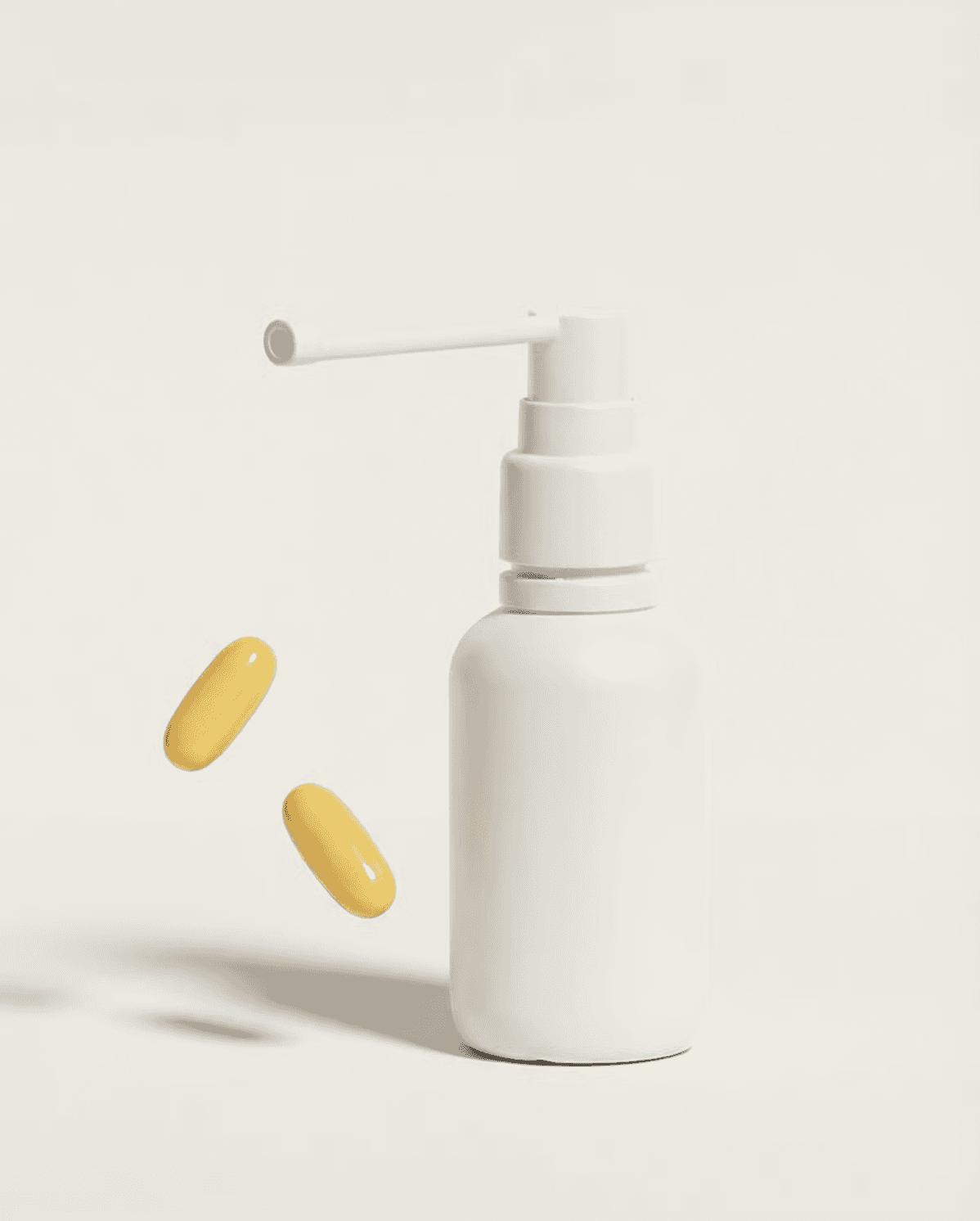
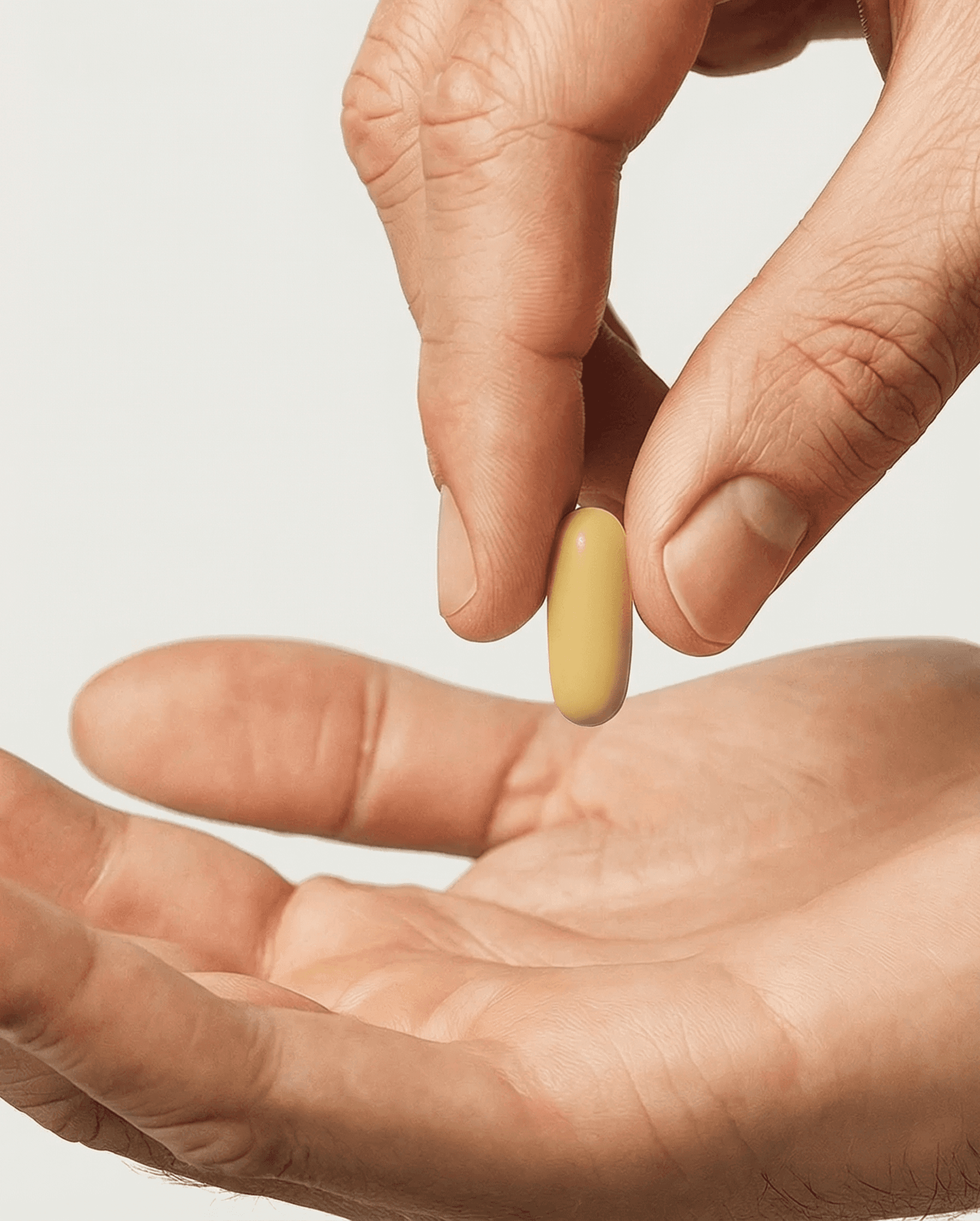
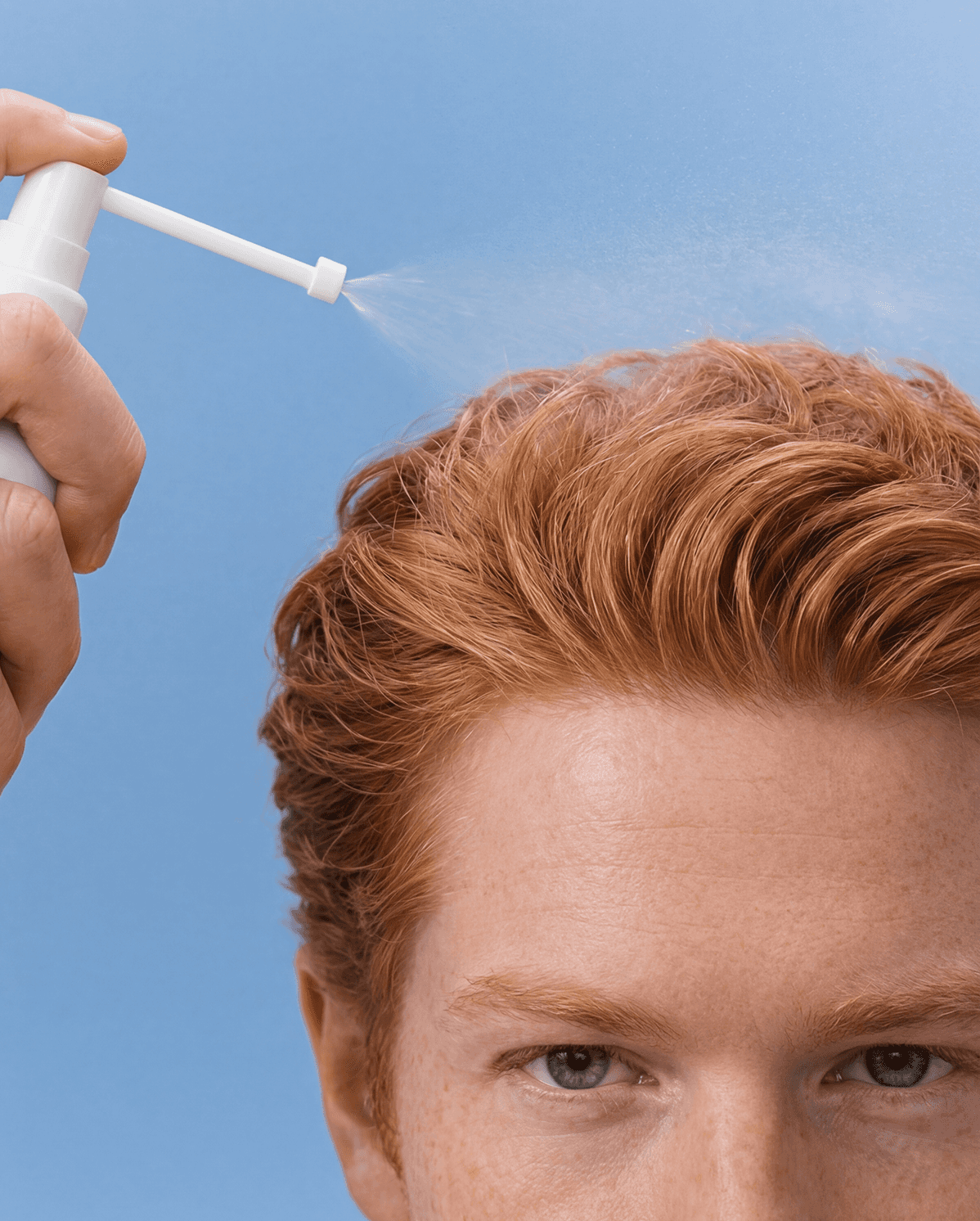
Dutasteride & Minoxidil
0.5MG TABLETS, 5% LOTION |
FROM
€69
PER MONTH
Combination for stubborn hair loss. Dutasteride blocks DHT, minoxidil stimulates blood flow. Especially effective when finasteride isn't enough.
" transform="translate(2 2)" width="15px"/><path d="M 0 4.5 L 0 0" fill="transparent" height="4.5px" id="NEO_gbJSu" stroke-dasharray="" stroke-linecap="square" stroke-linejoin="round" stroke-width="1" stroke="rgb(24, 24, 24)" transform="translate(9.5 6)" width="1px"/><path d="M 3 0 L 0 0" fill="transparent" height="1px" id="AMEFtKAje" stroke-dasharray="" stroke-linecap="square" stroke-linejoin="round" stroke-width="1" stroke="rgb(24, 24, 24)" transform="translate(9.5 10.5)" width="3px"/></g></g></svg>)
Most powerful DHT blocker
" transform="translate(2.375 2.375)" width="14.25px"/><path d="M 0 1.583 C 0 2.003 0.167 2.406 0.464 2.703 C 0.761 3 1.163 3.167 1.583 3.167 C 2.003 3.167 2.406 3 2.703 2.703 C 3 2.406 3.167 2.003 3.167 1.583 C 3.167 1.163 3 0.761 2.703 0.464 C 2.406 0.167 2.003 0 1.583 0 C 1.163 0 0.761 0.167 0.464 0.464 C 0.167 0.761 0 1.163 0 1.583 Z" fill="transparent" height="3.16667px" id="FjNPo97eX" stroke-dasharray="" stroke-linecap="square" stroke-linejoin="round" stroke-width="1" stroke="rgb(24, 24, 24)" transform="translate(5.543 5.543)" width="3.16667px"/><path d="M 0 1.583 C 0 2.003 0.167 2.406 0.464 2.703 C 0.761 3 1.163 3.167 1.583 3.167 C 2.003 3.167 2.406 3 2.703 2.703 C 3 2.406 3.167 2.003 3.167 1.583 C 3.167 1.163 3 0.761 2.703 0.464 C 2.406 0.167 2.003 0 1.583 0 C 1.163 0 0.761 0.167 0.464 0.464 C 0.167 0.761 0 1.163 0 1.583 Z" fill="transparent" height="3.1666700000000003px" id="X0PIGcfjy" stroke-dasharray="" stroke-linecap="square" stroke-linejoin="round" stroke-width="1" stroke="rgb(24, 24, 24)" transform="translate(13.461 3.957)" width="3.1667000000000005px"/><path d="M 0 1.583 C 0 2.003 0.167 2.406 0.464 2.703 C 0.761 3 1.163 3.167 1.583 3.167 C 2.003 3.167 2.406 3 2.703 2.703 C 3 2.406 3.167 2.003 3.167 1.583 C 3.167 1.163 3 0.761 2.703 0.464 C 2.406 0.167 2.003 0 1.583 0 C 1.163 0 0.761 0.167 0.464 0.464 C 0.167 0.761 0 1.163 0 1.583 Z" fill="transparent" height="3.1666000000000007px" id="d7F_rrdSp" stroke-dasharray="" stroke-linecap="square" stroke-linejoin="round" stroke-width="1" stroke="rgb(24, 24, 24)" transform="translate(9.5 10.293)" width="3.1667000000000005px"/><path d="M 0 0 L 1.852 2.28" fill="transparent" height="2.2799499999999995px" id="L79Jj3eQc" stroke-dasharray="" stroke-linecap="square" stroke-linejoin="round" stroke-width="1" stroke="rgb(24, 24, 24)" transform="translate(8.043 8.406)" width="1.8524999999999991px"/><path d="M 0 3.631 L 2.246 0" fill="transparent" height="3.6305799999999993px" id="J2HeJBV7d" stroke-dasharray="" stroke-linecap="square" stroke-linejoin="round" stroke-width="1" stroke="rgb(24, 24, 24)" transform="translate(11.945 6.92)" width="2.2460000000000004px"/></g></g></svg>)
If finasteride doesn't work well
" transform="translate(3.961 3.957)" width="11.083359999999999px"/><path d="M 0 1.583 C 0 1.163 0.167 0.761 0.464 0.464 C 0.761 0.167 1.163 0 1.583 0 L 3.167 0 C 3.587 0 3.989 0.167 4.286 0.464 C 4.583 0.761 4.75 1.163 4.75 1.583 C 4.75 2.003 4.583 2.406 4.286 2.703 C 3.989 3 3.587 3.167 3.167 3.167 L 1.583 3.167 C 1.163 3.167 0.761 3 0.464 2.703 C 0.167 2.406 0 2.003 0 1.583 Z" fill="transparent" height="3.16667px" id="dMi0IM4dJ" stroke-dasharray="" stroke-linecap="square" stroke-linejoin="round" stroke-width="1" stroke="rgb(24, 24, 24)" transform="translate(7.125 2.375)" width="4.75px"/><path d="M 0 3.167 L 0 0" fill="transparent" height="3.1666000000000007px" id="WqPwPty2d" stroke-dasharray="" stroke-linecap="square" stroke-linejoin="round" stroke-width="1" stroke="rgb(24, 24, 24)" transform="translate(7.125 10.293)" width="1px"/><path d="M 0 0.792 L 0 0" fill="transparent" height="1px" id="ncZUXG8p0" stroke-dasharray="" stroke-linecap="square" stroke-linejoin="round" stroke-width="1" stroke="rgb(24, 24, 24)" transform="translate(9.5 12.668)" width="1px"/><path d="M 0 1.583 L 0 0" fill="transparent" height="1.5832999999999995px" id="AxiCCKPvS" stroke-dasharray="" stroke-linecap="square" stroke-linejoin="round" stroke-width="1" stroke="rgb(24, 24, 24)" transform="translate(11.875 11.875)" width="1px"/></g></g></svg>)
Results from 3-6 months
What is dutasteride & minoxidil?
Answer 1
How do dutasteride and minoxidil work?
To add a video to your site, click the “Insert” button and navigate to the “Media” section. Then, drag and drop a video component onto the Canvas.
How do I use dutasteride & minoxidil?
To add a video to your site, click the “Insert” button and navigate to the “Media” section. Then, drag and drop a video component onto the Canvas.
What is dutasteride & minoxidil?
To add a video to your site, click the “Insert” button and navigate to the “Media” section. Then, drag and drop a video component onto the Canvas.
How do dutasteride and minoxidil work?
To add a video to your site, click the “Insert” button and navigate to the “Media” section. Then, drag and drop a video component onto the Canvas.
How do I use dutasteride & minoxidil?
I am very satisfied. Finally something that works. No more food noise in my head!
WEIGHT LOSS
Michiel
The entire process was smooth. Wel informed, pleasant communication, direct line to the doctor with questions.
PREMATURE EJACULATION
Bas
I was really amazed by how professional this service is. It helped me tremendously. Recommended!
ERECTILE DYSFUNCTION
Otto
I am very satisfied. Finally something that works. No more food noise in my head!
WEIGHT LOSS
Michiel
The entire process was smooth. Wel informed, pleasant communication, direct line to the doctor with questions.
PREMATURE EJACULATION
Bas
I was really amazed by how professional this service is. It helped me tremendously. Recommended!
ERECTILE DYSFUNCTION
Otto
Questions? Check our FAQ for answers to frequently asked questions.
Why is this combination more powerful than finasteride and minoxidil?
The crucial difference lies in the DHT blockade: dutasteride blocks both type I and type II 5-alpha-reductase enzymes, while finasteride only blocks type II. This results in 90% DHT reduction with dutasteride compared to 60-70% with finasteride - a significant difference. For men who do not respond adequately to finasteride, dutasteride often achieves the desired result because the remaining DHT is also blocked. When combined with minoxidil, you get the most comprehensive approach: maximum hormonal blockade plus local growth stimulation. This makes it the most powerful available option for stubborn or advanced hair loss.
When will I see results from the combination?
The first visible results usually appear after 3 to 6 months of daily use, similar to the finasteride-minoxidil combination. You will first notice a reduction in hair loss. Between 4 and 9 months, new hair growth becomes visible in previously bald areas. The maximum effect is achieved after 12 to 24 months of continuous use - dutasteride has a longer half-life than finasteride, so buildup takes slightly longer, but the effect is stronger. In the first weeks, temporary increased shedding may occur (shedding phase) - this is normal and a sign of recovery. Patience is essential: continue using both treatments daily, even if you do not see results yet.
Is the combination of dutasteride & minoxidil suitable for me?
This combination is particularly suitable for men aged 18 to 65 with persistent hair loss for whom finasteride was ineffective, or in cases of advanced male pattern baldness. It is also suitable if you want to start with the most powerful treatment available. Not suitable if you are completely bald (follicles are inactive), if you want to become pregnant with your partner, have severe liver or kidney problems, have scalp conditions such as psoriasis, or have heart diseases without medical advice. Dutasteride is prescribed off-label for hair loss (officially approved for prostate enlargement). Discuss with a doctor whether this powerful combination is right for your situation.
What are the possible side effects of this combination?
Dutasteride: Most men use dutasteride without problems. Sexual side effects (decreased libido, erection problems) occur in 1-2% of users. Rarely to very rarely: reduced semen volume, sensitive breasts, depression, allergic reactions, temporarily decreased fertility (very rare, reversible upon stopping). Side effects usually disappear over time or upon discontinuation. Dutasteride remains in the body longer than finasteride. Minoxidil: Mild scalp irritation (itching, redness, burning sensation) is the most common. Rarely: unwanted hair growth on the face or hands - always wash your hands. Very rarely: palpitations or dizziness. In case of serious side effects such as allergic reactions, persistent depression, or changes in breast tissue: stop immediately and consult a doctor.
Should I try finasteride first before dutasteride?
That depends on your situation. Many doctors recommend trying finasteride first because it is milder, well-studied, and effective for most men. If finasteride does not provide sufficient results after 12 months, you can switch to dutasteride. This step-by-step approach also helps to monitor side effects. However, in cases of aggressive or advanced hair loss, or if you want to start with the most powerful treatment immediately, you can also start with dutasteride right away. The advantage of trying finasteride first is that it is cheaper and any potential side effects dissipate faster after stopping (shorter half-life). Discuss with a doctor which strategy best fits your hair loss pattern and preferences.
Is the combination safe for long-term use?
Yes, both dutasteride and minoxidil are safe for long-term use. Dutasteride has been on the market for decades for prostate enlargement and is used off-label worldwide for hair loss without significant long-term risks. Minoxidil has an even longer safety profile. Studies show that dutasteride maintains its effectiveness with long-term use, and side effects do not worsen over time. However, it's important to note that dutasteride has a long half-life (approximately 5 weeks), which means it stays in your system longer. Regularly monitor your health and discuss any changes with a doctor. Continuous treatment is necessary for lasting results - think of it as long-term management of male pattern baldness.
Do I need to continue using both medications?
Yes, for lasting results you must continue to use both treatments continuously. Dutasteride and minoxidil only work during use - they do not cure male pattern baldness, but actively manage it. If you stop taking dutasteride, DHT production resumes and new hair loss begins within 6 to 12 months. Note: due to the long half-life of dutasteride (5 weeks), the effect lasts longer after stopping than with finasteride, but it will eventually fade. If you stop using minoxidil, new hair growth will disappear within 3 to 4 months. Once the desired results are achieved, you should continue using both treatments as maintenance. Think of it as chronic management - a long-term investment.
Does the combination work on my hairline and crown?
Yes, the combination works effectively on both the hairline and crown. Dutasteride is particularly powerful for the hairline and frontal areas due to its superior DHT blockade - it blocks both enzymes that produce DHT, even in these vulnerable zones. Minoxidil works best on the crown where blood circulation is crucial, but it also has positive effects on the temples and hairline. Studies show that dutasteride is more effective than finasteride for frontal hair loss, precisely because it also blocks type I enzymes that are more present in the hairline. Together, they provide maximum coverage for all problem areas. The combination is especially powerful for stubborn hairline recession that did not respond to finasteride.
Can I switch from finasteride to dutasteride?
Yes, switching from finasteride to dutasteride is safe and is often done when results are insufficient. You can switch directly without a tapering period - simply stop taking finasteride and start dutasteride the next day. Since dutasteride is more potent and also blocks type I enzymes, it may be more effective if finasteride was insufficient. It is important to note that dutasteride has a longer half-life, so it takes longer to become fully effective (6-12 months for maximum effect). Additionally, any side effects may persist longer after stopping. Discuss the switch with a doctor to determine if this is the right step. In the meantime, continue using minoxidil for continuous stimulation of growth during the transition.
Questions? Check our FAQ for answers to frequently asked questions.
Why is this combination more powerful than finasteride and minoxidil?
The crucial difference lies in the DHT blockade: dutasteride blocks both type I and type II 5-alpha-reductase enzymes, while finasteride only blocks type II. This results in 90% DHT reduction with dutasteride compared to 60-70% with finasteride - a significant difference. For men who do not respond adequately to finasteride, dutasteride often achieves the desired result because the remaining DHT is also blocked. When combined with minoxidil, you get the most comprehensive approach: maximum hormonal blockade plus local growth stimulation. This makes it the most powerful available option for stubborn or advanced hair loss.
When will I see results from the combination?
The first visible results usually appear after 3 to 6 months of daily use, similar to the finasteride-minoxidil combination. You will first notice a reduction in hair loss. Between 4 and 9 months, new hair growth becomes visible in previously bald areas. The maximum effect is achieved after 12 to 24 months of continuous use - dutasteride has a longer half-life than finasteride, so buildup takes slightly longer, but the effect is stronger. In the first weeks, temporary increased shedding may occur (shedding phase) - this is normal and a sign of recovery. Patience is essential: continue using both treatments daily, even if you do not see results yet.
Is the combination of dutasteride & minoxidil suitable for me?
This combination is particularly suitable for men aged 18 to 65 with persistent hair loss for whom finasteride was ineffective, or in cases of advanced male pattern baldness. It is also suitable if you want to start with the most powerful treatment available. Not suitable if you are completely bald (follicles are inactive), if you want to become pregnant with your partner, have severe liver or kidney problems, have scalp conditions such as psoriasis, or have heart diseases without medical advice. Dutasteride is prescribed off-label for hair loss (officially approved for prostate enlargement). Discuss with a doctor whether this powerful combination is right for your situation.
What are the possible side effects of this combination?
Dutasteride: Most men use dutasteride without problems. Sexual side effects (decreased libido, erection problems) occur in 1-2% of users. Rarely to very rarely: reduced semen volume, sensitive breasts, depression, allergic reactions, temporarily decreased fertility (very rare, reversible upon stopping). Side effects usually disappear over time or upon discontinuation. Dutasteride remains in the body longer than finasteride. Minoxidil: Mild scalp irritation (itching, redness, burning sensation) is the most common. Rarely: unwanted hair growth on the face or hands - always wash your hands. Very rarely: palpitations or dizziness. In case of serious side effects such as allergic reactions, persistent depression, or changes in breast tissue: stop immediately and consult a doctor.
Should I try finasteride first before dutasteride?
That depends on your situation. Many doctors recommend trying finasteride first because it is milder, well-studied, and effective for most men. If finasteride does not provide sufficient results after 12 months, you can switch to dutasteride. This step-by-step approach also helps to monitor side effects. However, in cases of aggressive or advanced hair loss, or if you want to start with the most powerful treatment immediately, you can also start with dutasteride right away. The advantage of trying finasteride first is that it is cheaper and any potential side effects dissipate faster after stopping (shorter half-life). Discuss with a doctor which strategy best fits your hair loss pattern and preferences.
Is the combination safe for long-term use?
Yes, both dutasteride and minoxidil are safe for long-term use. Dutasteride has been on the market for decades for prostate enlargement and is used off-label worldwide for hair loss without significant long-term risks. Minoxidil has an even longer safety profile. Studies show that dutasteride maintains its effectiveness with long-term use, and side effects do not worsen over time. However, it's important to note that dutasteride has a long half-life (approximately 5 weeks), which means it stays in your system longer. Regularly monitor your health and discuss any changes with a doctor. Continuous treatment is necessary for lasting results - think of it as long-term management of male pattern baldness.
Do I need to continue using both medications?
Yes, for lasting results you must continue to use both treatments continuously. Dutasteride and minoxidil only work during use - they do not cure male pattern baldness, but actively manage it. If you stop taking dutasteride, DHT production resumes and new hair loss begins within 6 to 12 months. Note: due to the long half-life of dutasteride (5 weeks), the effect lasts longer after stopping than with finasteride, but it will eventually fade. If you stop using minoxidil, new hair growth will disappear within 3 to 4 months. Once the desired results are achieved, you should continue using both treatments as maintenance. Think of it as chronic management - a long-term investment.
Does the combination work on my hairline and crown?
Yes, the combination works effectively on both the hairline and crown. Dutasteride is particularly powerful for the hairline and frontal areas due to its superior DHT blockade - it blocks both enzymes that produce DHT, even in these vulnerable zones. Minoxidil works best on the crown where blood circulation is crucial, but it also has positive effects on the temples and hairline. Studies show that dutasteride is more effective than finasteride for frontal hair loss, precisely because it also blocks type I enzymes that are more present in the hairline. Together, they provide maximum coverage for all problem areas. The combination is especially powerful for stubborn hairline recession that did not respond to finasteride.
Can I switch from finasteride to dutasteride?
Yes, switching from finasteride to dutasteride is safe and is often done when results are insufficient. You can switch directly without a tapering period - simply stop taking finasteride and start dutasteride the next day. Since dutasteride is more potent and also blocks type I enzymes, it may be more effective if finasteride was insufficient. It is important to note that dutasteride has a longer half-life, so it takes longer to become fully effective (6-12 months for maximum effect). Additionally, any side effects may persist longer after stopping. Discuss the switch with a doctor to determine if this is the right step. In the meantime, continue using minoxidil for continuous stimulation of growth during the transition.
Questions? Check our FAQ for answers to frequently asked questions.
Why is this combination more powerful than finasteride and minoxidil?
The crucial difference lies in the DHT blockade: dutasteride blocks both type I and type II 5-alpha-reductase enzymes, while finasteride only blocks type II. This results in 90% DHT reduction with dutasteride compared to 60-70% with finasteride - a significant difference. For men who do not respond adequately to finasteride, dutasteride often achieves the desired result because the remaining DHT is also blocked. When combined with minoxidil, you get the most comprehensive approach: maximum hormonal blockade plus local growth stimulation. This makes it the most powerful available option for stubborn or advanced hair loss.
When will I see results from the combination?
The first visible results usually appear after 3 to 6 months of daily use, similar to the finasteride-minoxidil combination. You will first notice a reduction in hair loss. Between 4 and 9 months, new hair growth becomes visible in previously bald areas. The maximum effect is achieved after 12 to 24 months of continuous use - dutasteride has a longer half-life than finasteride, so buildup takes slightly longer, but the effect is stronger. In the first weeks, temporary increased shedding may occur (shedding phase) - this is normal and a sign of recovery. Patience is essential: continue using both treatments daily, even if you do not see results yet.
Is the combination of dutasteride & minoxidil suitable for me?
This combination is particularly suitable for men aged 18 to 65 with persistent hair loss for whom finasteride was ineffective, or in cases of advanced male pattern baldness. It is also suitable if you want to start with the most powerful treatment available. Not suitable if you are completely bald (follicles are inactive), if you want to become pregnant with your partner, have severe liver or kidney problems, have scalp conditions such as psoriasis, or have heart diseases without medical advice. Dutasteride is prescribed off-label for hair loss (officially approved for prostate enlargement). Discuss with a doctor whether this powerful combination is right for your situation.
What are the possible side effects of this combination?
Dutasteride: Most men use dutasteride without problems. Sexual side effects (decreased libido, erection problems) occur in 1-2% of users. Rarely to very rarely: reduced semen volume, sensitive breasts, depression, allergic reactions, temporarily decreased fertility (very rare, reversible upon stopping). Side effects usually disappear over time or upon discontinuation. Dutasteride remains in the body longer than finasteride. Minoxidil: Mild scalp irritation (itching, redness, burning sensation) is the most common. Rarely: unwanted hair growth on the face or hands - always wash your hands. Very rarely: palpitations or dizziness. In case of serious side effects such as allergic reactions, persistent depression, or changes in breast tissue: stop immediately and consult a doctor.
Should I try finasteride first before dutasteride?
That depends on your situation. Many doctors recommend trying finasteride first because it is milder, well-studied, and effective for most men. If finasteride does not provide sufficient results after 12 months, you can switch to dutasteride. This step-by-step approach also helps to monitor side effects. However, in cases of aggressive or advanced hair loss, or if you want to start with the most powerful treatment immediately, you can also start with dutasteride right away. The advantage of trying finasteride first is that it is cheaper and any potential side effects dissipate faster after stopping (shorter half-life). Discuss with a doctor which strategy best fits your hair loss pattern and preferences.
Is the combination safe for long-term use?
Yes, both dutasteride and minoxidil are safe for long-term use. Dutasteride has been on the market for decades for prostate enlargement and is used off-label worldwide for hair loss without significant long-term risks. Minoxidil has an even longer safety profile. Studies show that dutasteride maintains its effectiveness with long-term use, and side effects do not worsen over time. However, it's important to note that dutasteride has a long half-life (approximately 5 weeks), which means it stays in your system longer. Regularly monitor your health and discuss any changes with a doctor. Continuous treatment is necessary for lasting results - think of it as long-term management of male pattern baldness.
Do I need to continue using both medications?
Yes, for lasting results you must continue to use both treatments continuously. Dutasteride and minoxidil only work during use - they do not cure male pattern baldness, but actively manage it. If you stop taking dutasteride, DHT production resumes and new hair loss begins within 6 to 12 months. Note: due to the long half-life of dutasteride (5 weeks), the effect lasts longer after stopping than with finasteride, but it will eventually fade. If you stop using minoxidil, new hair growth will disappear within 3 to 4 months. Once the desired results are achieved, you should continue using both treatments as maintenance. Think of it as chronic management - a long-term investment.
Does the combination work on my hairline and crown?
Yes, the combination works effectively on both the hairline and crown. Dutasteride is particularly powerful for the hairline and frontal areas due to its superior DHT blockade - it blocks both enzymes that produce DHT, even in these vulnerable zones. Minoxidil works best on the crown where blood circulation is crucial, but it also has positive effects on the temples and hairline. Studies show that dutasteride is more effective than finasteride for frontal hair loss, precisely because it also blocks type I enzymes that are more present in the hairline. Together, they provide maximum coverage for all problem areas. The combination is especially powerful for stubborn hairline recession that did not respond to finasteride.
Can I switch from finasteride to dutasteride?
Yes, switching from finasteride to dutasteride is safe and is often done when results are insufficient. You can switch directly without a tapering period - simply stop taking finasteride and start dutasteride the next day. Since dutasteride is more potent and also blocks type I enzymes, it may be more effective if finasteride was insufficient. It is important to note that dutasteride has a longer half-life, so it takes longer to become fully effective (6-12 months for maximum effect). Additionally, any side effects may persist longer after stopping. Discuss the switch with a doctor to determine if this is the right step. In the meantime, continue using minoxidil for continuous stimulation of growth during the transition.
Questions? Check our FAQ for answers to frequently asked questions.
Why is this combination more powerful than finasteride and minoxidil?
The crucial difference lies in the DHT blockade: dutasteride blocks both type I and type II 5-alpha-reductase enzymes, while finasteride only blocks type II. This results in 90% DHT reduction with dutasteride compared to 60-70% with finasteride - a significant difference. For men who do not respond adequately to finasteride, dutasteride often achieves the desired result because the remaining DHT is also blocked. When combined with minoxidil, you get the most comprehensive approach: maximum hormonal blockade plus local growth stimulation. This makes it the most powerful available option for stubborn or advanced hair loss.
When will I see results from the combination?
The first visible results usually appear after 3 to 6 months of daily use, similar to the finasteride-minoxidil combination. You will first notice a reduction in hair loss. Between 4 and 9 months, new hair growth becomes visible in previously bald areas. The maximum effect is achieved after 12 to 24 months of continuous use - dutasteride has a longer half-life than finasteride, so buildup takes slightly longer, but the effect is stronger. In the first weeks, temporary increased shedding may occur (shedding phase) - this is normal and a sign of recovery. Patience is essential: continue using both treatments daily, even if you do not see results yet.
Is the combination of dutasteride & minoxidil suitable for me?
This combination is particularly suitable for men aged 18 to 65 with persistent hair loss for whom finasteride was ineffective, or in cases of advanced male pattern baldness. It is also suitable if you want to start with the most powerful treatment available. Not suitable if you are completely bald (follicles are inactive), if you want to become pregnant with your partner, have severe liver or kidney problems, have scalp conditions such as psoriasis, or have heart diseases without medical advice. Dutasteride is prescribed off-label for hair loss (officially approved for prostate enlargement). Discuss with a doctor whether this powerful combination is right for your situation.
What are the possible side effects of this combination?
Dutasteride: Most men use dutasteride without problems. Sexual side effects (decreased libido, erection problems) occur in 1-2% of users. Rarely to very rarely: reduced semen volume, sensitive breasts, depression, allergic reactions, temporarily decreased fertility (very rare, reversible upon stopping). Side effects usually disappear over time or upon discontinuation. Dutasteride remains in the body longer than finasteride. Minoxidil: Mild scalp irritation (itching, redness, burning sensation) is the most common. Rarely: unwanted hair growth on the face or hands - always wash your hands. Very rarely: palpitations or dizziness. In case of serious side effects such as allergic reactions, persistent depression, or changes in breast tissue: stop immediately and consult a doctor.
Should I try finasteride first before dutasteride?
That depends on your situation. Many doctors recommend trying finasteride first because it is milder, well-studied, and effective for most men. If finasteride does not provide sufficient results after 12 months, you can switch to dutasteride. This step-by-step approach also helps to monitor side effects. However, in cases of aggressive or advanced hair loss, or if you want to start with the most powerful treatment immediately, you can also start with dutasteride right away. The advantage of trying finasteride first is that it is cheaper and any potential side effects dissipate faster after stopping (shorter half-life). Discuss with a doctor which strategy best fits your hair loss pattern and preferences.
Is the combination safe for long-term use?
Yes, both dutasteride and minoxidil are safe for long-term use. Dutasteride has been on the market for decades for prostate enlargement and is used off-label worldwide for hair loss without significant long-term risks. Minoxidil has an even longer safety profile. Studies show that dutasteride maintains its effectiveness with long-term use, and side effects do not worsen over time. However, it's important to note that dutasteride has a long half-life (approximately 5 weeks), which means it stays in your system longer. Regularly monitor your health and discuss any changes with a doctor. Continuous treatment is necessary for lasting results - think of it as long-term management of male pattern baldness.
Do I need to continue using both medications?
Yes, for lasting results you must continue to use both treatments continuously. Dutasteride and minoxidil only work during use - they do not cure male pattern baldness, but actively manage it. If you stop taking dutasteride, DHT production resumes and new hair loss begins within 6 to 12 months. Note: due to the long half-life of dutasteride (5 weeks), the effect lasts longer after stopping than with finasteride, but it will eventually fade. If you stop using minoxidil, new hair growth will disappear within 3 to 4 months. Once the desired results are achieved, you should continue using both treatments as maintenance. Think of it as chronic management - a long-term investment.
Does the combination work on my hairline and crown?
Yes, the combination works effectively on both the hairline and crown. Dutasteride is particularly powerful for the hairline and frontal areas due to its superior DHT blockade - it blocks both enzymes that produce DHT, even in these vulnerable zones. Minoxidil works best on the crown where blood circulation is crucial, but it also has positive effects on the temples and hairline. Studies show that dutasteride is more effective than finasteride for frontal hair loss, precisely because it also blocks type I enzymes that are more present in the hairline. Together, they provide maximum coverage for all problem areas. The combination is especially powerful for stubborn hairline recession that did not respond to finasteride.
Can I switch from finasteride to dutasteride?
Yes, switching from finasteride to dutasteride is safe and is often done when results are insufficient. You can switch directly without a tapering period - simply stop taking finasteride and start dutasteride the next day. Since dutasteride is more potent and also blocks type I enzymes, it may be more effective if finasteride was insufficient. It is important to note that dutasteride has a longer half-life, so it takes longer to become fully effective (6-12 months for maximum effect). Additionally, any side effects may persist longer after stopping. Discuss the switch with a doctor to determine if this is the right step. In the meantime, continue using minoxidil for continuous stimulation of growth during the transition.
Do you want to
read more about it?

Do you want to
read more about it?
Do you want to
read more about it?
Do you want to
read more about it?